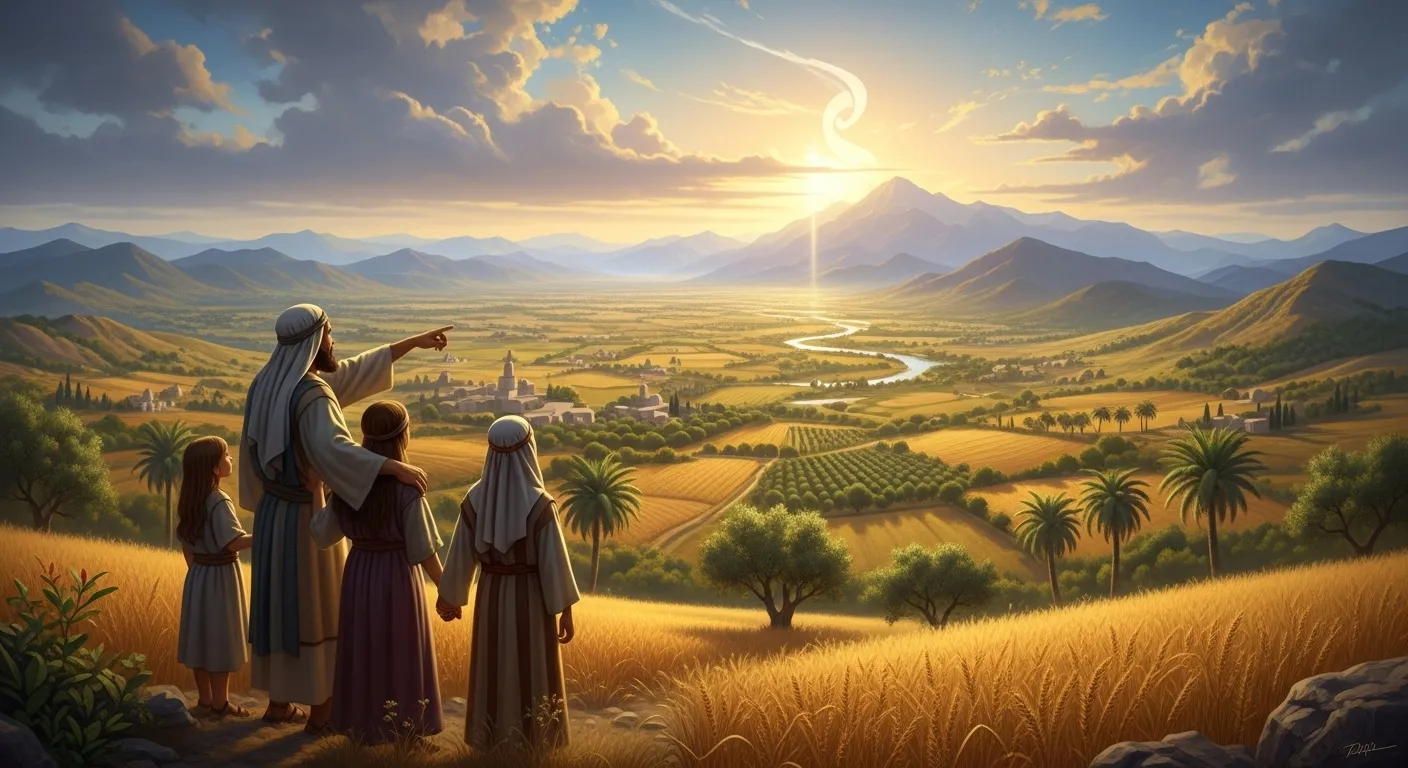
Have you ever felt like you were walking through a long desert season in life? Maybe you prayed for change, waited for answers, or hoped for a better future. During those moments, many Christians think about the Promised Land—a powerful image found throughout the Bible.
The Promised Land is more than just a place on a map. It represents God’s promise, blessing, hope, and faithfulness. For the people of Israel, it was the land God promised to give them after years of slavery and hardship. For believers today, it can also symbolize spiritual growth, God’s guidance, and the fulfillment of His plans.
Many people wonder about the Promised Land meaning in the Bible because they see it mentioned in Scripture, hear it in sermons, or even dream about reaching a beautiful land after a difficult journey. They ask, “What is God trying to teach me through this symbol?”
The Bible uses the Promised Land as a picture of God’s love and care for His people. It reminds us that even when the journey is hard, God remains faithful to His promises.
Let’s explore the biblical meaning, spiritual symbolism, and deeper Christian message behind the Promised Land.
Biblical Meaning of the Promised Land
The Promised Land was the land God promised to Abraham and his descendants. This promise appears throughout the Old Testament and became a central part of Israel’s history.
In Genesis 12:7, God told Abraham:
“To your offspring I will give this land.”
This promise showed God’s covenant and faithfulness. The land was not earned by human strength. It was a gift from God.
A Sign of God’s Faithfulness
One of the most important meanings of the Promised Land is God’s faithfulness.
Abraham received the promise, but many years passed before his descendants entered the land. Despite delays and challenges, God kept His word.
Joshua 21:45 says:
“Not one of all the Lord’s good promises to Israel failed; every one was fulfilled.”
This teaches believers that God always remembers His promises, even when answers seem delayed.
Freedom After Bondage
The journey to the Promised Land began after God rescued the Israelites from slavery in Egypt.
Their story shows that God desires to bring His people from:
- Bondage to freedom
- Fear to faith
- Despair to hope
- Wandering to purpose
The Promised Land became a symbol of a new beginning and a better future under God’s care.
A Place of Blessing and Provision
The Bible describes the Promised Land as a land flowing with milk and honey (Exodus 3:8).
This phrase represents:
- Abundance
- Provision
- Fruitfulness
- God’s blessing
It reminds Christians that God desires to provide for His people spiritually and physically according to His will.
A Test of Faith
Although the Promised Land was a gift, reaching it required faith.
When Moses sent spies into Canaan, most returned with fear. They focused on obstacles instead of God’s promise.
Only Joshua and Caleb trusted God fully.
Their story teaches an important lesson: God’s promises often require believers to walk by faith rather than sight.
A Warning Against Disobedience
The Promised Land also carries a warning message.
Many Israelites failed to enter because they repeatedly doubted God and rebelled against Him.
Their experience reminds Christians that unbelief can keep people from enjoying the blessings God desires for them.
Hebrews 3:19 explains:
“So we see that they were not able to enter, because of their unbelief.”
This does not mean God stops loving His people. Instead, it highlights the importance of trusting Him during difficult seasons.
A Picture of Eternal Hope
Many Christians also see the Promised Land as a symbol of eternal life and God’s kingdom.
Just as Israel journeyed toward Canaan, believers journey toward their eternal home with God.
Because of this, the Promised Land often represents:
- Salvation
- Spiritual rest
- God’s presence
- Heavenly hope
This deeper biblical symbolism points beyond a physical location to a lasting relationship with God.
Spiritual Significance and Symbolism
The spiritual meaning of the Promised Land goes far beyond ancient Israel.
For many believers, it represents a season of spiritual awakening, growth, and transformation.
Sometimes life feels like a wilderness. We face challenges, delays, and uncertainty. During those moments, the Promised Land reminds us that God is still leading us forward.
The journey teaches several important lessons:
Trust God’s Timing
The Israelites did not reach the Promised Land immediately.
Likewise, God’s plans often unfold step by step. Waiting does not mean God has forgotten His promise.
Keep Moving Forward in Faith
Faith means trusting God even when the destination is not yet visible.
The Promised Land symbolizes the rewards of remaining faithful during difficult seasons.
Seek God’s Presence
The greatest blessing was not the land itself—it was God’s presence with His people.
Today, Christians are encouraged to seek God through:
- Prayer
- Worship
- Bible study
- Obedience
These practices help believers stay connected to God’s guidance and direction.
Embrace Spiritual Growth
Every challenge on the journey shaped Israel’s faith.
In the same way, life’s struggles often become opportunities for spiritual maturity and deeper trust in God.
Biblical Interpretations in Dreams or Real Life
Many people associate the Promised Land with dream interpretation and personal spiritual experiences.
If you dream about entering a beautiful land, crossing a river, or reaching a peaceful destination, it may symbolize hope, progress, or a new season in life.
A peaceful Promised Land dream may represent:
- God’s guidance
- Spiritual growth
- Fulfilled prayers
- New opportunities
- Renewed faith
If the journey feels difficult or blocked, the dream may reflect challenges, fears, or obstacles that require trust in God.
For example:
- Reaching the land may symbolize answered prayers.
- Walking toward it may symbolize a season of preparation.
- Seeing it from afar may remind you to remain patient and faithful.
While dreams can carry personal meaning, Christians should always seek wisdom through prayer and Scripture rather than relying only on dream symbols.
The most important question is not what the dream predicts but how it encourages deeper trust in God.
Practical Lessons & Faith Insights
The Promised Land teaches believers to:
- Trust God’s promises even during delays.
- Walk by faith instead of fear.
- Stay faithful through difficult seasons.
- Seek God’s presence every day.
- Remember that God’s plans are always good.
When life feels uncertain, prayer and Scripture can help you stay focused on God’s guidance and timing.
Conclusion
The Promised Land meaning in the Bible is a beautiful reminder of God’s faithfulness, blessing, and eternal hope. It represents far more than a physical location—it symbolizes God’s promises, spiritual growth, and the journey of faith.
Whether you encounter this symbol in Scripture, prayer, or personal reflection, its message remains the same: God keeps His promises. Even when the road feels long, He continues to guide His people toward His purpose.
Take heart, trust His timing, and keep moving forward in faith. The God who led His people to the Promised Land is still leading believers today with love, hope, and grace.