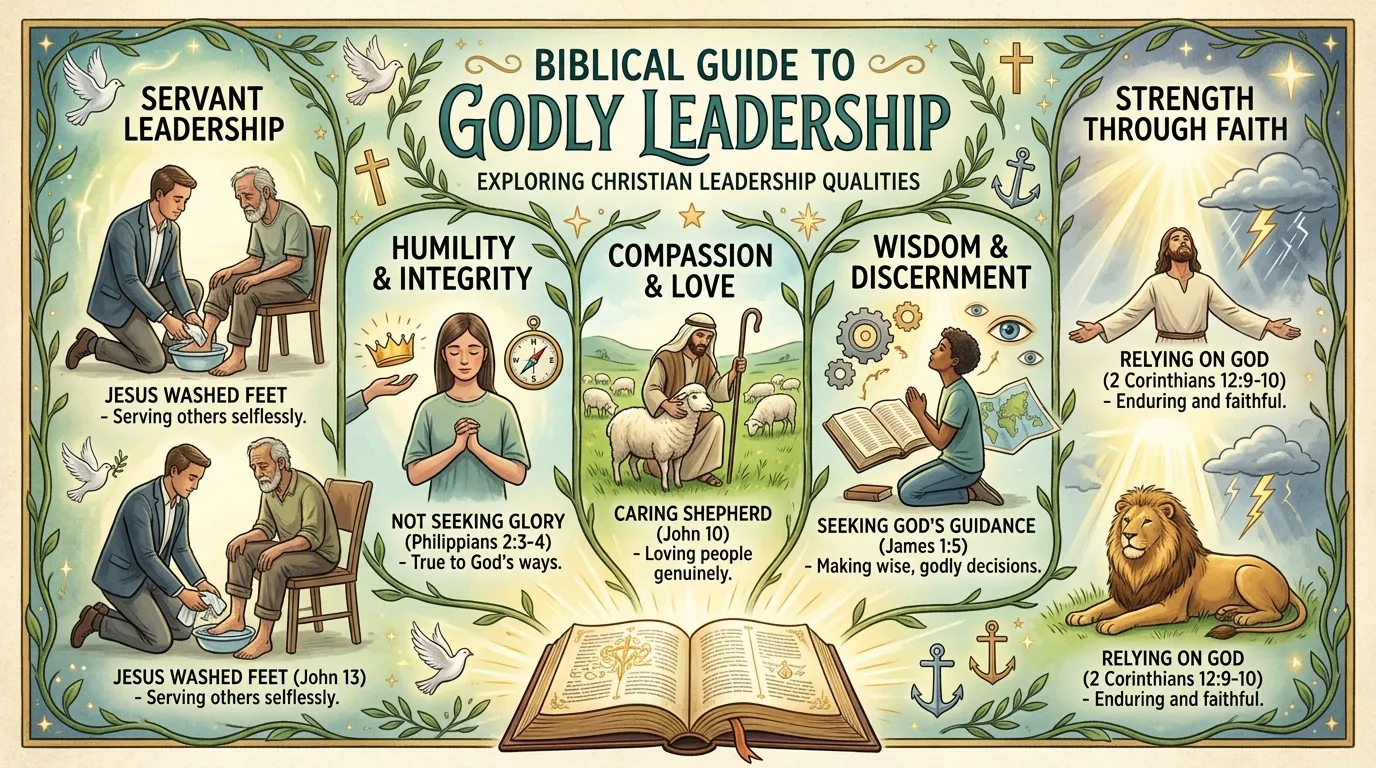
Imagine a shepherd walking quietly ahead of his flock. He does not force the sheep to follow. Instead, he leads them with care, wisdom, and love. The sheep trust him because they know he wants what is best for them.
This picture helps us understand Christian leadership qualities meaning in the Bible. In Scripture, leadership is not about power, fame, or control. It is about serving others, honoring God, and guiding people with a humble heart.
Many people wonder what makes a great Christian leader. Is it knowledge? Is it strength? Is it influence? The Bible gives a clear answer. God values qualities like humility, faithfulness, wisdom, courage, and love.
Whether you are a church leader, parent, teacher, business owner, or simply someone seeking to follow Christ, biblical leadership matters. God calls every believer to be a light to others and to reflect His character in daily life.
The Bible is filled with examples of godly leaders such as Moses, David, Nehemiah, and above all, Jesus Christ. Their stories reveal timeless lessons about leadership, faith, and obedience to God.
So, what is the biblical meaning of Christian leadership qualities? Let us explore what Scripture teaches and discover the spiritual message behind godly leadership.
Biblical Meaning of Christian Leadership Qualities
The Christian leadership qualities meaning in the Bible centers on reflecting God’s character while serving others. Biblical leadership begins with a heart surrendered to God.
Leadership Starts With Humility
One of the most important leadership qualities in Scripture is humility.
Jesus taught His followers:
“Whoever wants to become great among you must be your servant.” (Mark 10:43)
This teaching was very different from the world’s view of leadership. Instead of seeking status, Christian leaders are called to serve.
Jesus Himself washed the feet of His disciples, showing that true greatness comes through humble service.
A humble leader:
- Listens to others
- Gives glory to God
- Admits mistakes
- Serves rather than controls
Humility opens the door for God to work through a person.
Leadership Requires Wisdom
The Bible often connects leadership with wisdom.
King Solomon asked God for wisdom instead of riches or power. God honored this request and blessed him greatly (1 Kings 3:9-12).
Biblical wisdom helps leaders:
- Make good decisions
- Discern right from wrong
- Guide people wisely
- Avoid harmful choices
Christian leaders seek God’s direction through prayer and Scripture rather than relying only on human understanding.
Leadership Is Built on Integrity
Integrity means being honest and trustworthy.
Proverbs 11:3 says:
“The integrity of the upright guides them.”
A leader’s character matters more than titles or achievements.
People follow leaders they trust. Godly leaders strive to be the same person in public and private. Their words and actions match their faith.
Leadership Requires Courage
Many biblical leaders faced fear and challenges.
Moses confronted Pharaoh.
Joshua led Israel into the Promised Land.
Nehemiah rebuilt Jerusalem despite opposition.
God repeatedly told His people:
“Be strong and courageous.” (Joshua 1:9)
Christian leaders need courage to stand for truth, protect others, and follow God’s calling even when it is difficult.
Leadership Flows From Love
Love is the foundation of Christian leadership.
Jesus said the greatest commandment is to love God and love others (Matthew 22:37-39).
Without love, leadership becomes empty and self-centered.
A loving leader:
- Encourages people
- Shows compassion
- Forgives mistakes
- Builds others up
Love reflects the heart of Christ and creates lasting influence.
Warning Signs in Biblical Leadership
The Bible also warns about unhealthy leadership.
Some leaders became proud, selfish, or disobedient. Their downfall serves as a lesson for believers today.
Warning signs include:
- Pride
- Greed
- Abuse of authority
- Lack of accountability
- Ignoring God’s guidance
These examples remind us that leadership should always remain rooted in faith and obedience.
The overall biblical symbolism of leadership points to stewardship. Leaders are caretakers entrusted with responsibilities by God. Their role is to guide others toward truth, hope, and spiritual growth.
Spiritual Significance and Symbolism
The spiritual symbolism of Christian leadership goes beyond positions or titles.
Leadership in the Bible often represents a person’s relationship with God. Before someone can lead others well, they must first learn to follow God faithfully.
This carries a powerful spiritual message. God is less concerned about outward success and more concerned about the condition of the heart.
Christian leadership symbolizes:
- Faithfulness to God
- Spiritual maturity
- Servant-hearted living
- Trust in God’s guidance
- Responsibility toward others
Think about a parent teaching a child, a pastor encouraging a congregation, or a friend offering biblical advice. These are all examples of leadership in everyday life.
Leadership can also symbolize spiritual transformation. As believers grow closer to God through prayer, worship, and Scripture, they become better equipped to influence others positively.
The presence of these qualities often reflects a deeper spiritual awakening. God shapes leaders over time, teaching patience, compassion, wisdom, and dependence on Him.
Through this process, leadership becomes less about personal success and more about fulfilling God’s purpose.
Biblical Interpretations in Dreams or Real Life
Sometimes people dream about leading a group, guiding others, teaching, or helping people find direction. In dream interpretation, such images may symbolize spiritual responsibility, growth, or a calling from God.
A peaceful leadership dream may represent:
- God’s guidance in your life
- Growing confidence in faith
- New opportunities to serve
- Spiritual maturity
If the dream feels joyful and calm, it can point to God’s preparation for future responsibilities.
On the other hand, a stressful leadership dream may reveal:
- Fear of responsibility
- Need for wisdom
- Spiritual struggles
- Dependence on God’s help
In real life, leadership opportunities often appear unexpectedly. You may be asked to encourage someone, mentor a friend, lead a ministry, or support your family through a difficult season.
These moments can serve as reminders that God equips those He calls.
When seeking meaning, pray for wisdom and compare your experiences with biblical principles. God often provides clarity through Scripture, prayer, and faithful counsel.
Practical Lessons & Faith Insights
The Bible teaches that great leaders are first faithful followers of God.
Here are a few simple faith lessons:
- Pray before making important decisions.
- Lead with humility and kindness.
- Seek wisdom through Scripture.
- Trust God’s timing and guidance.
- Serve others with genuine love.
As you grow in faith, God can use you to encourage, guide, and bless those around you.
Conclusion
The Christian leadership qualities meaning in the Bible reveals that true leadership is rooted in humility, wisdom, integrity, courage, and love. These qualities reflect the character of Christ and point others toward God.
Whether leadership appears in a dream, a ministry, a family role, or everyday life, its deeper meaning is often connected to God’s calling and purpose. Through prayer, faith, and obedience, believers can develop the qualities that honor Him.
May you trust God’s guidance, walk in His wisdom, and allow His Spirit to shape you into the leader He created you to be. With God’s help, every step of faithful leadership can become a testimony of His grace, love, and power.