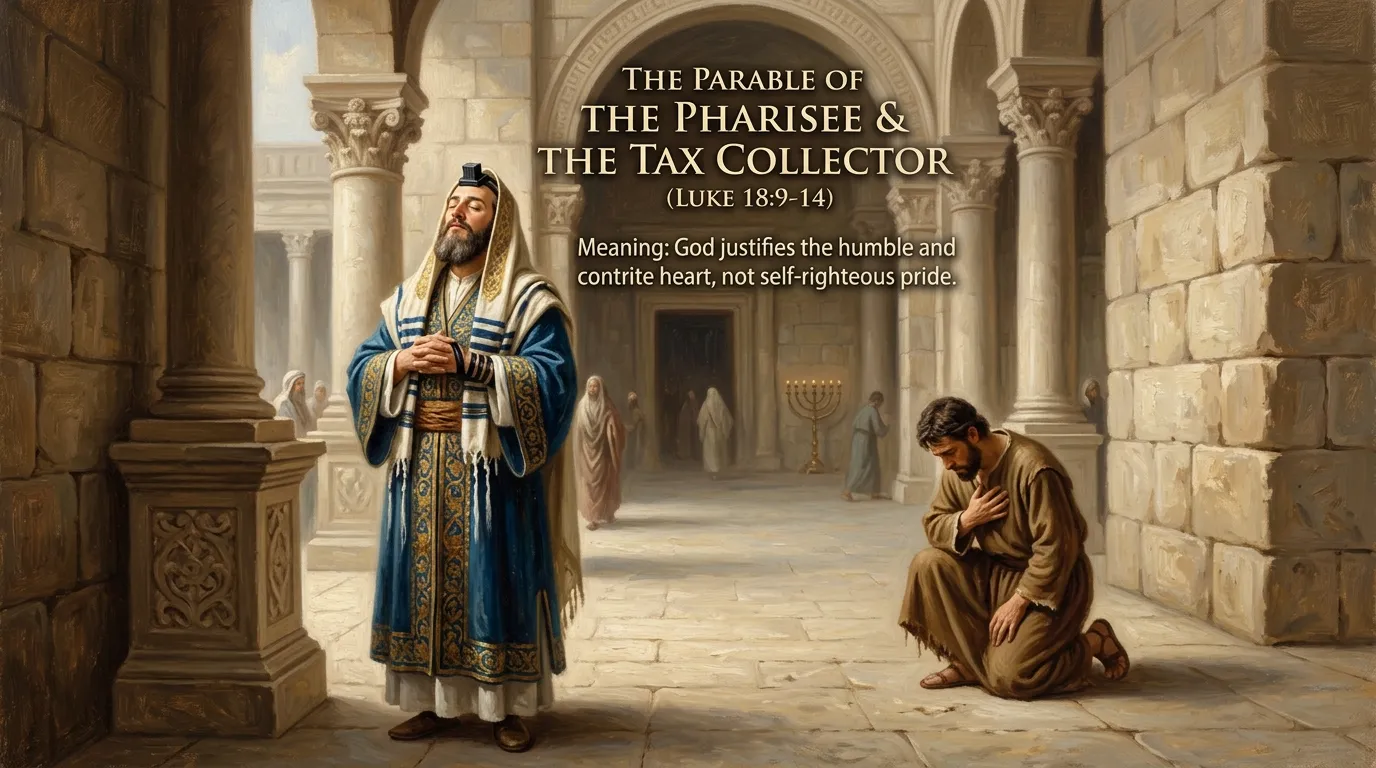
Have you ever watched two people pray in very different ways? One person may speak with confidence and list all the good things they have done. Another may bow their head, feeling broken and asking God for mercy.
This picture is very similar to the Parable of the Pharisee and Tax Collector found in the Bible. Jesus shared this story to teach an important lesson about the heart. It is not just about prayer. It is about humility, faith, and our relationship with God.
Many Christians search for the Parable of Pharisee and tax collector meaning in the Bible because they want to understand its deeper message. Others may have heard this story in church, seen it in a dream, or felt drawn to its meaning during a season of spiritual growth.
What was Jesus trying to teach? Why did God accept one prayer and not the other? What does this story reveal about pride, repentance, and God’s grace?
The answers bring hope and encouragement. This parable reminds us that God looks beyond appearances. He sees the true condition of our hearts.
Let’s explore the biblical meaning, spiritual symbolism, and life-changing lessons found in this powerful teaching of Jesus.
Biblical Meaning of the Parable of Pharisee and Tax Collector
The Parable of the Pharisee and Tax Collector is found in Luke 18:9-14. Jesus told this story to people who trusted in their own goodness and looked down on others.
In the parable, two men went to the temple to pray.
The first man was a Pharisee. Pharisees were religious leaders known for following God’s laws carefully. During his prayer, he thanked God that he was not like other people. He listed his good works, fasting, and giving.
The second man was a tax collector. Tax collectors were often disliked because many worked for the Roman government and were known for dishonesty. Instead of praising himself, the tax collector stood at a distance. He would not even lift his eyes to heaven. He prayed:
“God, have mercy on me, a sinner.” (Luke 18:13)
Jesus then gave a surprising answer. He said the tax collector went home justified before God, not the Pharisee.
The Meaning of Humility
One of the main messages of this parable is humility.
The Pharisee believed his good deeds made him righteous. The tax collector knew he needed God’s mercy. Jesus showed that God honors humble hearts.
James 4:6 says:
“God opposes the proud but shows favor to the humble.”
This verse supports the message of the parable. God is pleased when people come to Him with honesty and humility.
A Lesson About Grace
The tax collector could not earn God’s forgiveness. He simply asked for mercy.
This points to God’s amazing grace. Salvation does not come from being perfect. It comes from trusting God and receiving His forgiveness.
Ephesians 2:8-9 teaches that people are saved by grace through faith, not by their own works.
The parable reminds believers that God’s love cannot be earned. It is a gift.
A Warning Against Pride
The Pharisee’s problem was not prayer. His problem was pride.
He compared himself to others and believed he was spiritually superior. Instead of focusing on God, he focused on himself.
Pride can quietly enter a person’s heart. It can make people judge others, ignore their own weaknesses, and depend on their achievements rather than God’s mercy.
This story serves as a gentle warning to stay humble before God.
God’s Desire for Honest Hearts
The tax collector’s prayer was short and simple. Yet it was powerful because it was sincere.
God values genuine repentance more than impressive words.
Psalm 51:17 says:
“A broken and contrite heart, O God, you will not despise.”
This verse reveals an important biblical symbolism within the parable. God welcomes those who come to Him honestly and seek His forgiveness.
Hope for Every Believer
The tax collector represents every person who has ever felt unworthy, broken, or ashamed.
The good news is that God’s mercy is available to all.
No matter what mistakes someone has made, God hears sincere prayers. His grace can restore, heal, and transform lives.
This is one of the most comforting aspects of the Parable of Pharisee and tax collector meaning in the Bible. It reminds believers that God’s love is greater than their failures.
Spiritual Significance and Symbolism
The spiritual symbolism of this parable goes beyond two men praying in a temple.
The Pharisee symbolizes self-righteousness, pride, and dependence on human effort. The tax collector symbolizes repentance, humility, and trust in God’s mercy.
These two figures often represent choices believers face every day.
Will we rely on our own achievements, or will we trust God?
Will we compare ourselves with others, or will we seek God’s guidance for our own lives?
The parable also speaks about spiritual awakening. Many people experience moments when they realize they need God more deeply than before. Like the tax collector, they come before God with honesty and prayer.
For example, a person may struggle with failure, disappointment, or guilt. During that season, they may discover a deeper relationship with God through humility and faith.
The story teaches that true spiritual growth begins when pride ends.
It reminds Christians that the presence of God is found not through perfection but through a humble heart seeking Him.
Biblical Interpretations in Dreams or Real Life
Sometimes people dream about praying, confessing sins, standing in a church, or seeing themselves as either the Pharisee or the tax collector.
In Christian dream interpretation, these images may carry a spiritual message.
If the dream feels peaceful, it may symbolize repentance, forgiveness, and a renewed relationship with God. It can be a sign that God is drawing the person closer to Him.
If the dream feels uncomfortable or convicting, it may be encouraging self-examination. God could be revealing areas where pride, judgment, or self-reliance have taken root.
In real life, the lesson appears whenever people compare themselves to others or struggle with feelings of unworthiness.
The parable reminds believers that God does not measure people by status, success, or reputation. He looks at the heart.
Prayer, humility, and trust in God’s mercy remain the foundation of Christian faith.
Practical Lessons & Faith Insights
- Approach God with humility and honesty.
- Avoid comparing your faith journey with others.
- Trust God’s grace more than your own achievements.
- Make prayer a daily habit of repentance and gratitude.
- Remember that God welcomes sincere hearts seeking His guidance.
The parable teaches that true faith grows through dependence on God, not pride in ourselves.
Conclusion
The Parable of Pharisee and tax collector meaning in the Bible reveals a timeless truth: God honors humility and responds to sincere repentance. While the Pharisee trusted in his own goodness, the tax collector trusted in God’s mercy.
This powerful story reminds believers that God’s grace is available to everyone who comes to Him with an honest heart. Whether in prayer, daily life, or moments of spiritual reflection, the message remains the same.
Stay humble, trust God’s mercy, and seek His guidance. When you do, you can walk forward with faith, hope, and confidence in His unfailing love.