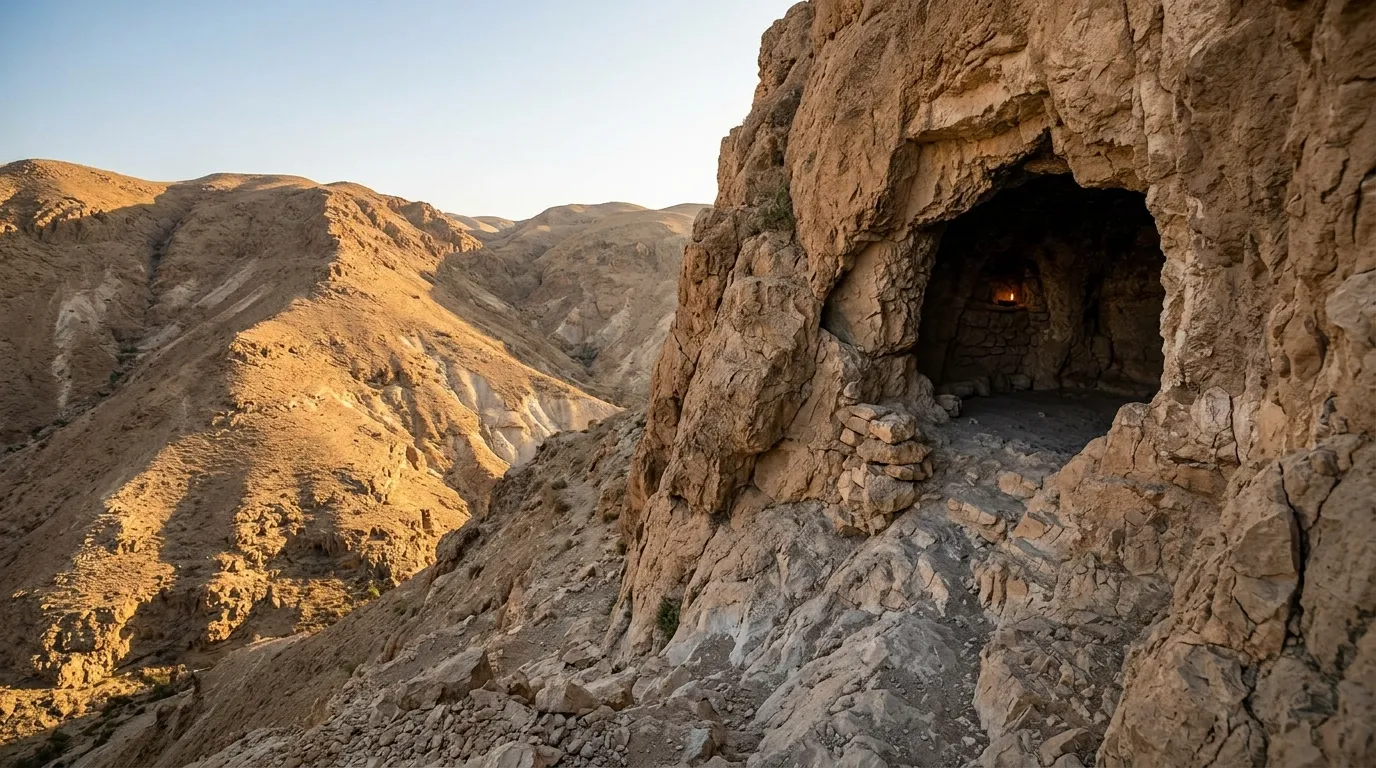
Have you ever imagined standing inside a dark cave? The wind is quiet. The world outside feels far away. A cave can seem lonely, scary, or even peaceful.
Many people dream about caves or think about them while reading the Bible. They may ask, “What do caves in the Old Testament mean in the Bible?” Why did so many Bible figures hide, pray, or meet God in caves?
In the Old Testament, caves were more than holes in the ground. They became places of protection, waiting, prayer, and divine encounters. Some people entered caves because they were afraid. Others found hope there. In these hidden places, God often worked in powerful ways.
Life can sometimes feel like being inside a cave. We may feel alone, confused, or uncertain about the future. Yet the Bible shows that God often meets His people in dark and quiet places.
The caves in the Old Testament meaning in the Bible teaches us that God can turn places of fear into places of faith. He can bring light into darkness and hope into difficult seasons.
Let us explore the biblical symbolism and spiritual message behind caves in Scripture.
Biblical Meaning of Caves in the Old Testament
Throughout the Old Testament, caves appear many times. They often symbolize refuge, protection, waiting, and God’s hidden work.
Caves as Places of Refuge
One of the clearest meanings of caves is safety.
When danger came, people often hid in caves. During times of war, fear, or trouble, caves became shelters.
In 1 Samuel 13:6, the Israelites hid in caves because they were afraid of their enemies.
This shows that caves can represent seasons when people seek God’s protection during difficult times.
Psalm 46:1 says:
“God is our refuge and strength, an ever-present help in trouble.”
Even when people entered physical caves, their true refuge was God.
David in the Cave
One of the most famous cave stories involves David.
Before becoming king, David fled from King Saul and hid in the cave of Adullam. In 1 Samuel 22:1, David entered the cave while facing fear and uncertainty.
Yet God used this hidden season to prepare him for leadership.
The cave became a place of:
- Waiting
- Prayer
- Protection
- Spiritual growth
Sometimes God allows hidden seasons before He opens new doors.
Elijah and the Cave
The prophet Elijah also entered a cave.
After a difficult season, Elijah felt tired and discouraged. He went into a cave on Mount Horeb. In 1 Kings 19:11–13, God spoke to Elijah not through wind, earthquake, or fire, but through a gentle whisper.
This story teaches that caves can become places where we hear God’s voice.
When life becomes noisy, God sometimes calls us into quiet places.
Abraham and the Cave of Machpelah
Another important cave appears in Genesis 23.
Abraham purchased the Cave of Machpelah as a burial place for Sarah. This cave became a family burial site for the patriarchs.
Here the cave represents:
- Memory
- Promise
- Faith in God’s future
Even in death, Abraham trusted God’s promises.
Positive Meanings of Caves
The Bible often shows caves as symbols of:
- God’s protection
- Spiritual retreat
- Waiting on God
- Prayer and reflection
- Divine preparation
- Safety during trials
Warning Meanings of Caves
Sometimes caves also represent:
- Fear
- Hiding from responsibility
- Spiritual isolation
- Lack of trust
People occasionally hid because they feared enemies rather than trusting God completely.
Therefore, caves can symbolize both refuge and fear, depending on the situation.
The biblical symbolism reminds believers to seek God while in difficult seasons.
Spiritual Significance and Symbolism
The spiritual meaning of caves often connects to the human heart.
There are seasons when life feels dark. We may feel hidden, forgotten, or alone. Yet God often does His greatest work during these quiet times.
A cave can symbolize:
- Spiritual transformation
- Inner healing
- Waiting on God
- Personal growth
- Renewed faith
David entered a cave as a fugitive but left stronger.
Elijah entered discouraged but left encouraged.
Sometimes God uses hidden seasons to prepare us for future blessings.
Think about prayer. Many believers find that difficult seasons draw them closer to God. The “cave” may be a job loss, illness, disappointment, or waiting period.
In these moments, God’s presence becomes very real.
Psalm 139:11–12 reminds us that even darkness is not dark to God.
The cave teaches believers to trust God’s timing. It reminds us that hidden seasons are not wasted seasons.
A quiet place can become a holy place.
Biblical Interpretations in Dreams or Real Life
Many people experience caves in dreams or feel drawn to this biblical image.
A peaceful cave in a dream may symbolize:
- God’s protection
- Rest and healing
- Time for prayer
- Spiritual renewal
A dark or frightening cave may reflect:
- Fear
- Uncertainty
- Emotional struggles
- A season of waiting
If someone dreams of leaving a cave, it may symbolize:
- New beginnings
- Deliverance
- Spiritual growth
- God’s guidance
If a person feels trapped inside a cave, it may be an invitation to pray and seek God’s direction.
Christian dream interpretation should always be guided by Scripture, prayer, and wisdom.
God often uses symbols to encourage believers, but His Word remains the foundation.
The spiritual message of a cave is usually one of hope: God is present even in hidden places.
Practical Lessons and Faith Insights
The caves in the Old Testament teach several important lessons:
- God protects us during difficult seasons.
- Waiting seasons have purpose.
- Prayer brings peace in hidden places.
- God speaks in quiet moments.
- Dark seasons do not last forever.
Spend time in prayer, trust God’s timing, and remember that the Lord often prepares His people before bringing them into new blessings.
Conclusion
The caves in the Old Testament meaning in the Bible points to refuge, preparation, prayer, and God’s presence. From David to Elijah, caves became places where faith grew stronger.
If you feel like you are in a cave season today, remember that God has not forgotten you. The darkness may only be temporary, but His presence remains constant.
Trust Him, seek Him in prayer, and believe that the God who met His people in the caves of Scripture still meets His children today. Even in hidden places, God’s light continues to shine.