Picture an old wooden yoke resting on the shoulders of two oxen. It is heavy. It presses down. It guides their steps and controls their direction. In Bible times, this image was familiar to everyone. A yoke meant work, burden, and responsibility.
Now imagine Jesus speaking gentle words to tired hearts:
“Take My yoke upon you… for My yoke is easy and My burden is light.” (Matthew 11:29–30)
This contrast creates curiosity. How can a yoke be both heavy and easy? Many people search for the yoke meaning in the Bible because they feel weighed down by life, faith struggles, sin, fear, or responsibility. Others may have seen a yoke in a dream or felt spiritually “bound” and want to understand what God might be saying.
In Scripture, the yoke is more than farming equipment. It is a powerful spiritual symbol. Sometimes it represents bondage and oppression. Other times, it shows obedience, partnership, and rest in God.
So what does the yoke truly mean in the Bible? Is it a warning, an invitation, or a promise? Let’s explore the biblical meaning and discover the spiritual message God may be sharing with your heart.
Biblical Meaning of Yoke in the Bible
In the Bible, the yoke carries deep symbolic meaning. It often represents control, submission, or burden, but the meaning changes depending on who places the yoke.
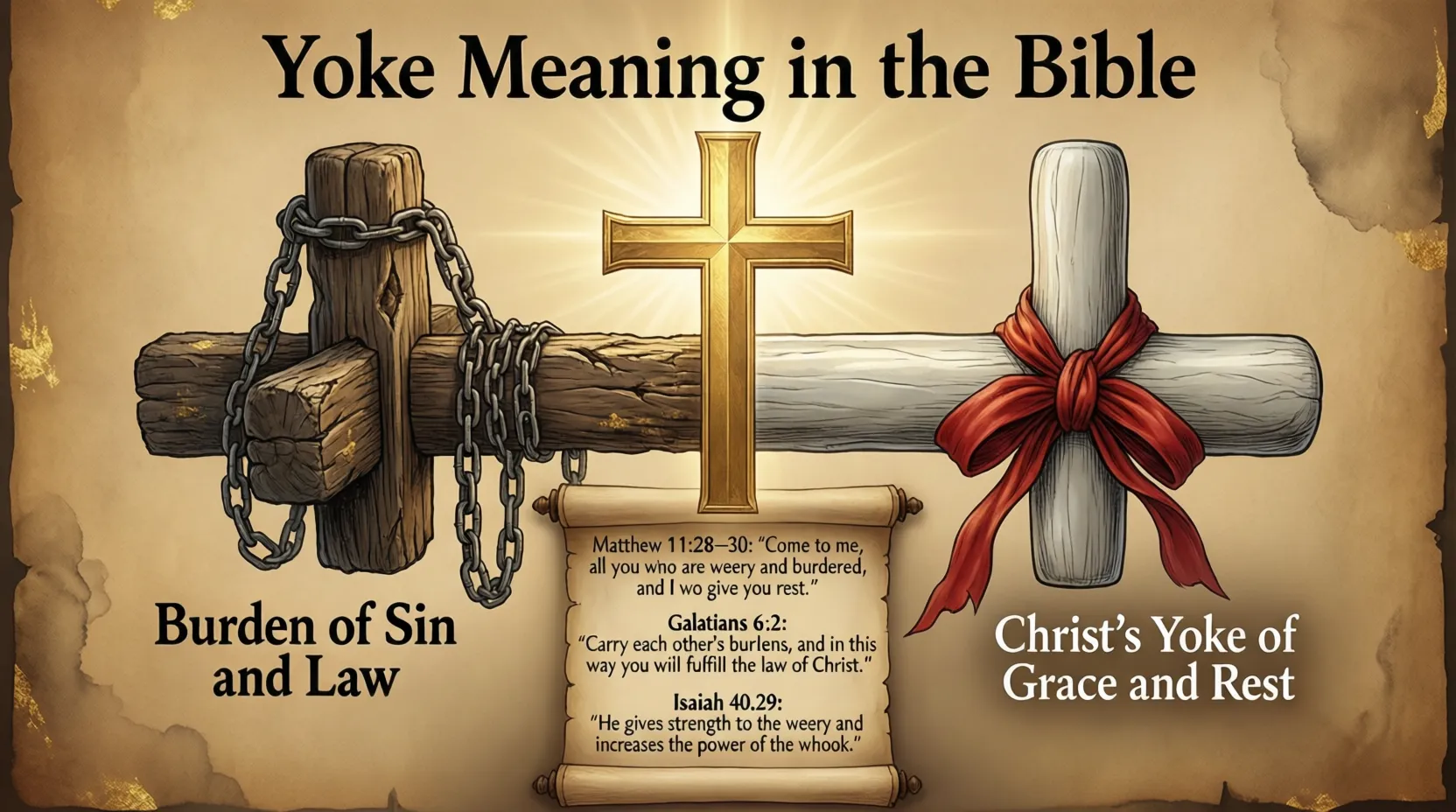
Yoke as Bondage and Oppression
Many Bible verses use the yoke as a symbol of slavery, sin, or harsh rule.
- “I broke the bars of your yoke and enabled you to walk with heads held high.” (Leviticus 26:13)
- “Break the yoke of the oppressor.” (Isaiah 58:6)
Here, the yoke represents oppression. It shows how sin, fear, injustice, or enemy forces can weigh heavily on a person’s life. Spiritually, this kind of yoke reflects bondage that steals joy and freedom.
God often speaks of breaking the yoke, showing His desire to free His people. This reveals God’s heart: He does not want His children crushed by spiritual chains.
Yoke as Obedience and Discipline
The Bible also uses the yoke to describe discipline and submission to God’s will.
- “It is good for one to bear the yoke while young.” (Lamentations 3:27)
Here, the yoke is not punishment. It is training. It teaches humility, patience, and obedience. Just as animals learn to walk straight under a yoke, believers learn to walk in God’s ways through discipline.
This kind of yoke helps shape spiritual maturity.
Jesus’ Yoke: Rest, Not Burden
The most powerful teaching about the yoke comes from Jesus Himself:
- “Take My yoke upon you and learn from Me… For My yoke is easy and My burden is light.” (Matthew 11:29–30)
Jesus redefines the yoke. His yoke is not about control or exhaustion. It is about relationship. To be yoked with Christ means:
- Walking with Him, not alone
- Sharing burdens together
- Being guided by love, not fear
The biblical meaning of yoke here points to peace, rest, and divine guidance. Jesus does not remove responsibility—but He removes the crushing weight of doing life without God.
Spiritual Significance and Symbolism
Spiritually, the yoke represents what leads your life. Everyone carries a yoke—whether they realize it or not.
A yoke can symbolize:
- Sin or addiction
- Fear or guilt
- Legalism or religious pressure
- God’s guidance and wisdom
Being yoked to the wrong things leads to exhaustion and confusion. Being yoked to Christ leads to clarity, peace, and purpose.
Spiritually, a yoke also speaks of partnership. When two oxen are yoked together, the stronger one guides the weaker. In faith, Jesus is the stronger one. He carries what we cannot.
This symbolism teaches an important lesson:
God never asks you to carry life alone.
When believers surrender their burdens in prayer, they often feel a spiritual shift. That is the yoke changing—from heavy to light, from fear to faith.
The yoke reminds Christians to ask:
“What am I attached to?”
If your yoke brings stress, shame, or constant struggle, God may be calling you to exchange it for His.
Biblical Interpretations in Dreams or Real Life
Many people experience the symbol of a yoke in dreams or personal moments. Biblically, context matters.
- Heavy or painful yoke: This often represents spiritual pressure, guilt, or feeling trapped. It may be a sign to seek freedom through prayer and repentance.
- Broken yoke: Symbolizes deliverance, healing, or answered prayer. God may be showing that bondage is ending.
- Easy or light yoke: Reflects surrender to God’s will and walking closely with Jesus.
- Being yoked with another person: Can symbolize partnership, marriage, ministry, or influence—good or bad depending on emotions felt in the dream.
In real life, feeling “yoked” can show up as emotional exhaustion or spiritual confusion. The Bible encourages believers to bring these feelings to God. Through prayer, God reveals whether a yoke needs to be carried, shared, or removed.
Practical Lessons & Faith Insights
The yoke meaning in the Bible teaches powerful faith lessons. God invites believers to examine their burdens. Not every weight comes from Him. Through prayer and trust, you can release false yokes and accept Christ’s gentle guidance. Walking with Jesus brings rest, direction, and renewed hope—even in difficult seasons.
Conclusion
The yoke in the Bible is a symbol of choice. It can represent bondage or blessing, burden or rest. God’s message is clear: He desires freedom for His people. When you choose Christ’s yoke, you choose peace over pressure and hope over heaviness. Let God guide your steps, lighten your load, and lead you into the rest your soul has been seeking.