Imagine waking up after a quiet night of prayer. Your heart feels calm, but your mind keeps returning to one word you heard, read, or felt deeply: righteousness. Maybe it came from a Bible verse, a sermon, or even a dream where you were trying to do the right thing. You wonder, “What does righteousness really mean in the Bible? Is it about being perfect? Or is God showing me something deeper?”
Many Christians ask this question during moments of reflection, struggle, or spiritual growth. The word righteousness can sound heavy or unreachable. It may feel like a standard too high to meet. Yet, when we look closely at Scripture, we discover something gentle, hopeful, and life-giving.
The righteousness meaning in the Bible is not just about rules or moral effort. It is about relationship, faith, and God’s grace working in our lives. It speaks to how we stand before God, how we live with others, and how our hearts are shaped by His truth.
So what does righteousness truly mean from a biblical view? And why does it matter so much to our faith journey? Let us explore what God’s Word says and how this message brings comfort, guidance, and hope.
Biblical Meaning of Righteousness
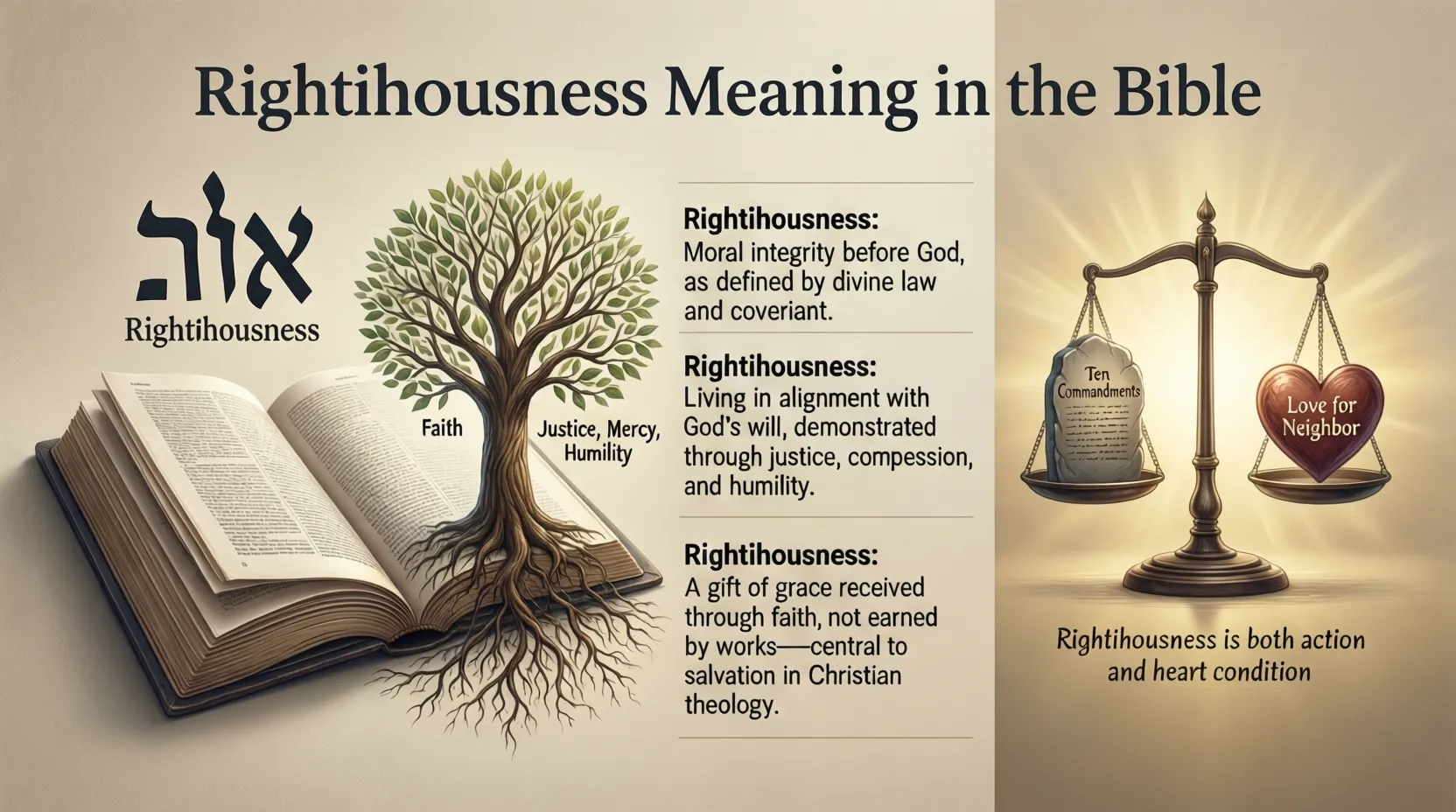
In the Bible, righteousness means being right with God and living in a way that reflects His will. It is not about being sinless or perfect. Instead, it is about trusting God and allowing Him to guide your life.
Righteousness in the Old Testament
In the Old Testament, righteousness is often linked to obedience and faithfulness. A righteous person is someone who walks with God and seeks His ways.
“Abraham believed the Lord, and He credited it to him as righteousness.” (Genesis 15:6)
This verse is powerful. Abraham was not called righteous because he was perfect. He was called righteous because he believed God. His faith made him right before the Lord.
The Psalms also speak often about righteousness:
“The Lord knows the way of the righteous, but the way of the wicked leads to destruction.” (Psalm 1:6)
Here, righteousness means choosing God’s path, trusting His guidance, and turning away from evil.
Righteousness in the New Testament
In the New Testament, the meaning becomes even clearer through Jesus Christ. The Bible teaches that true righteousness comes through faith in Jesus, not through human effort alone.
“For in the gospel the righteousness of God is revealed—a righteousness that is by faith from first to last.” (Romans 1:17)
This shows us that righteousness is a gift from God. Through Jesus’ sacrifice, believers are made righteous in God’s eyes.
“God made Him who had no sin to be sin for us, so that in Him we might become the righteousness of God.” (2 Corinthians 5:21)
This is the heart of the Christian meaning of righteousness. Jesus took our sin so we could receive His righteousness.
Positive and Warning Meanings
Positive meaning:
Righteousness brings peace, joy, and confidence before God. It reminds believers that they are loved and accepted through Christ.
Warning meaning:
The Bible also warns against self-righteousness—thinking we are right because of our own actions.
“For all have sinned and fall short of the glory of God.” (Romans 3:23)
This verse reminds us to stay humble and depend on God’s grace, not pride.
Spiritual Significance and Symbolism
The spiritual symbolism of righteousness is deeply tied to transformation and new life. It represents a heart that is slowly being shaped by God’s truth.
When you grow in righteousness, you may notice:
- A stronger desire to pray
- A softer heart toward others
- A deeper awareness of God’s presence
- A longing to live in peace and honesty
Righteousness is not instant. It is a journey of faith. Each day, God gently leads believers to reflect His love more clearly.
Think of righteousness like clean white clothing in the Bible. White often symbolizes purity and forgiveness.
“Blessed are those who hunger and thirst for righteousness, for they will be filled.” (Matthew 5:6)
This verse shows that righteousness is something we desire, not something we force. God fills those who seek Him with sincere hearts.
In daily life, righteousness may look simple:
- Choosing forgiveness instead of anger
- Speaking truth with kindness
- Trusting God during hard times
- Turning back to prayer when feeling lost
These small acts reflect a heart aligned with God.
Biblical Interpretations in Dreams or Real Life
Many believers experience righteousness as a theme in dreams or strong feelings during prayer. These moments are often gentle reminders from God.
In Dreams
- Feeling clean or forgiven may symbolize God’s grace and renewal.
- Wearing white clothes can represent righteousness through Christ.
- Trying to do the right thing may reflect a desire to please God or live faithfully.
If the dream feels peaceful, it often points to assurance and spiritual growth.
If it feels stressful, it may be a loving call to return to prayer or trust God more fully.
In Real Life
You may sense righteousness during:
- Repentance and confession
- Worship or reading Scripture
- Moments of choosing faith over fear
These are signs of the Holy Spirit working within you, guiding your steps.
Practical Lessons & Faith Insights
Righteousness teaches believers to depend on God, not perfection. Spend time in prayer, read the Bible slowly, and trust God’s timing. Remember, righteousness grows through faith, grace, and daily surrender. God walks with you, even when you stumble.
Conclusion
The righteousness meaning in the Bible is a message of hope, not pressure. It reminds us that being right with God comes through faith in Jesus, not flawless living. Righteousness is God’s loving gift that brings peace, guidance, and transformation. As you seek Him, trust that God is shaping your heart day by day. Walk forward with faith, knowing His grace is enough.