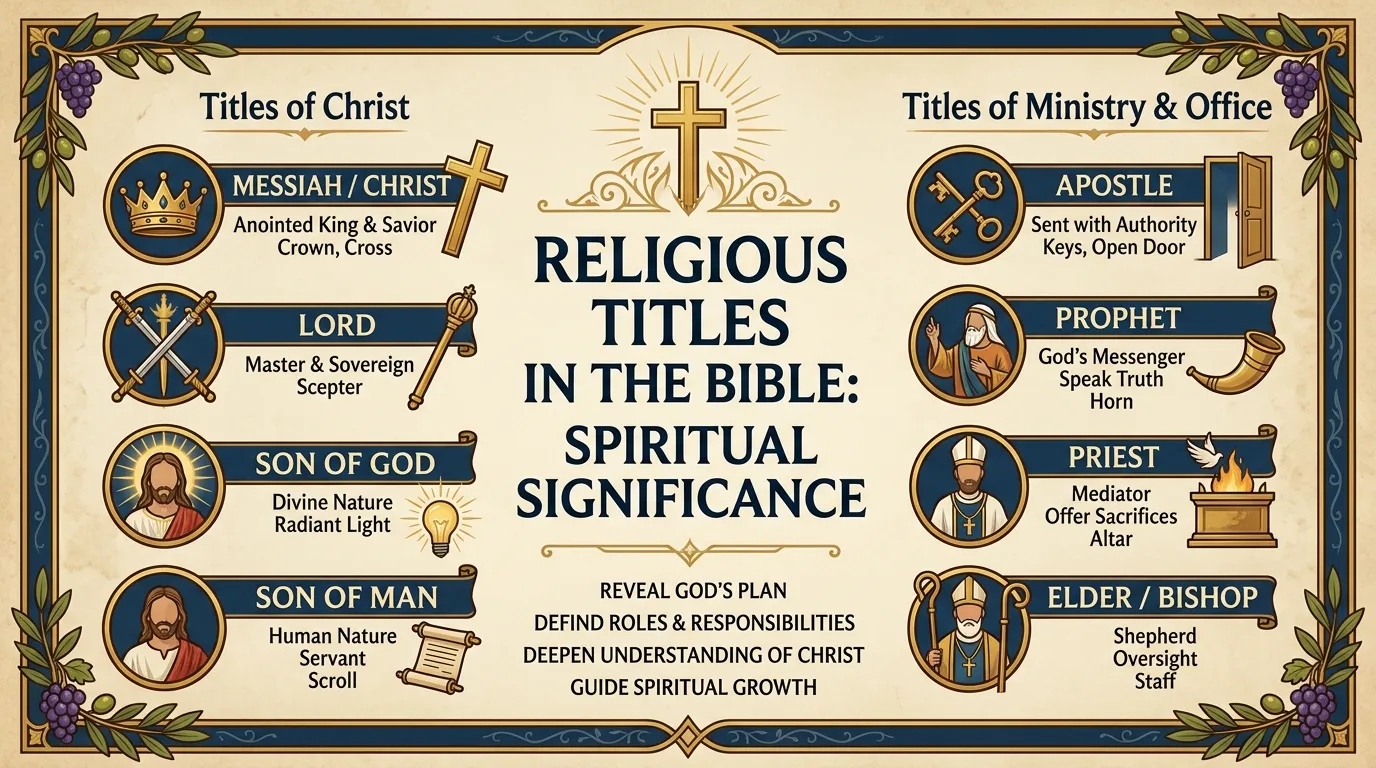
Have you ever heard a religious title like priest, bishop, pastor, prophet, or rabbi and wondered what it really means in the Bible? Maybe you came across one while reading Scripture, listening to a sermon, or even in a dream. These titles are more than just names. They often carry a deep spiritual message about leadership, service, faith, and God’s purpose.
Imagine walking through a church and seeing people serving in different ways. One teaches, another prays, and another cares for those in need. In the Bible, God often gave people specific roles and responsibilities. Their titles reflected their calling and mission.
Many Christians also wonder if seeing religious titles in dreams or real-life experiences has a special meaning. Could God be showing something about spiritual growth, guidance, or a new season of faith? What does the Bible say about these titles and their symbolism?
The good news is that Scripture provides valuable insight. Understanding religious titles meaning in the Bible can help believers gain wisdom, recognize God’s work, and deepen their relationship with Him.
Let’s explore what these titles mean and the spiritual lessons they can teach us.
Biblical Meaning of Religious Titles
In the Bible, religious titles often describe a person’s calling, responsibility, or relationship with God. They were not meant to elevate people above others but to identify the work God had given them to do.
Priest: A Bridge Between God and People
One of the most common religious titles in Scripture is priest. Priests served in the temple and offered sacrifices on behalf of the people.
In the Old Testament, priests helped Israel worship God properly. However, the New Testament reveals that Jesus became our perfect High Priest.
Hebrews 4:14 says:
“We have a great high priest who has passed through the heavens, Jesus the Son of God.”
The title points to intercession, worship, and access to God.
Prophet: God’s Messenger
A prophet was someone chosen to deliver God’s messages. Prophets encouraged, warned, corrected, and guided people according to God’s will.
Examples include:
- Isaiah
- Jeremiah
- Ezekiel
The title symbolizes divine guidance, truth, and spiritual awareness.
When the Bible speaks about prophets, it often highlights God’s desire to communicate with His people.
Shepherd or Pastor: Caring Leadership
The Bible frequently compares spiritual leaders to shepherds.
Jesus Himself said in John 10:11:
“I am the good shepherd.”
A shepherd protects, guides, and feeds the flock. Today, pastors continue this role by caring for believers and teaching God’s Word.
This title represents:
- Protection
- Guidance
- Compassion
- Spiritual care
Rabbi: Teacher of Truth
The title rabbi means teacher. During His earthly ministry, Jesus was often called Rabbi.
Teaching was highly valued in biblical culture because God’s truth helped people walk in faith and obedience.
This title symbolizes:
- Wisdom
- Learning
- Spiritual growth
- Understanding Scripture
Bishop or Overseer
In the early church, bishops or overseers were responsible for guiding congregations and maintaining sound doctrine.
1 Timothy 3 describes the qualities expected of church leaders.
This title points to:
- Responsibility
- Leadership
- Accountability
- Faithfulness
Apostle: One Sent by God
The word apostle means “one who is sent.”
Jesus chose twelve apostles to spread the Gospel and establish the early church.
The title reflects:
- Mission
- Evangelism
- Spiritual authority
- Service to God’s kingdom
Positive Meanings of Religious Titles
Biblically, religious titles often symbolize:
- Faithful service
- Godly leadership
- Divine purpose
- Spiritual maturity
- Guidance from God
- Commitment to God’s work
They remind believers that God calls people to serve others with humility and love.
Warning Meanings in Scripture
The Bible also warns against seeking titles for pride or personal glory.
Jesus taught in Matthew 23:11:
“The greatest among you shall be your servant.”
Religious titles should never become symbols of pride. Instead, they should reflect a heart devoted to God.
This teaches an important lesson: true spiritual leadership is rooted in humility, not status.
Spiritual Significance and Symbolism
The spiritual symbolism behind religious titles goes far beyond positions in a church.
Each title reveals something about God’s character and His relationship with His people.
A priest reminds us that God provides access to His presence.
A prophet reminds us that God still speaks through His Word.
A shepherd shows God’s loving care and protection.
A teacher points to wisdom and understanding.
An apostle reflects God’s mission for believers to share the Gospel.
These titles can also symbolize stages in a Christian’s faith journey.
For example:
- A new believer may feel called to learn like a student.
- A mature Christian may begin helping and guiding others.
- Someone experiencing spiritual awakening may sense a stronger desire to serve God.
In everyday life, these symbols can encourage believers to ask:
- How can I serve others?
- Am I listening to God’s guidance?
- How can I grow deeper in faith?
The answers often lead to greater spiritual growth and transformation.
Biblical Interpretations in Dreams or Real Life
Sometimes people dream about religious leaders or hear religious titles in dreams. While dream interpretation should always be approached carefully and prayerfully, such dreams may carry a spiritual message.
If a dream includes a caring pastor or shepherd, it may symbolize God’s protection and guidance.
If a prophet appears in a dream, it may encourage the dreamer to pay attention to God’s Word and seek spiritual wisdom.
A priest in a dream may represent prayer, worship, or a closer relationship with God.
The emotional tone of the dream matters too.
Peaceful Scenarios
These may symbolize:
- Spiritual growth
- Divine guidance
- God’s presence
- Encouragement in faith
Fearful or Confusing Scenarios
These may encourage:
- Self-examination
- Prayer
- Seeking biblical wisdom
- Trusting God’s direction
In real life, encountering these titles may simply remind believers of God’s ongoing work in His church and in their personal faith journey.
Practical Lessons & Faith Insights
The Bible teaches that religious titles are ultimately about service, not status.
When you encounter these titles, remember to:
- Pray for spiritual understanding.
- Seek God’s guidance through Scripture.
- Serve others with humility.
- Focus on God’s calling rather than recognition.
- Trust God’s timing and purpose for your life.
Every title points back to God’s greater plan and His love for His people.
Conclusion
Understanding religious titles meaning in the Bible helps reveal powerful truths about faith, leadership, and God’s purpose. Whether it is a priest, prophet, shepherd, teacher, bishop, or apostle, each title carries rich biblical symbolism and spiritual meaning.
These titles remind us that God calls His people to serve, guide, teach, and love others. They also encourage believers to seek deeper faith, wisdom, and a closer relationship with Him.
As you reflect on these meanings, may you find hope, guidance, and the presence of God in your journey, trusting that He continues to lead His people with wisdom, grace, and love.