Imagine a tired farmer walking behind two oxen, joined together by a wooden bar resting on their shoulders. This wooden bar is called a yoke. It helps them walk in the same direction, share the load, and work together. At first glance, the image feels heavy. It speaks of labor, effort, and responsibility.
But then Jesus says something surprising:
“Take my yoke upon you… For my yoke is easy and my burden is light.” (Matthew 11:29–30)
This moment makes many believers pause and wonder.
Why would Jesus invite us to take a yoke if it represents burden?
What is the deeper spiritual meaning behind the yoke in the Bible?
Some people encounter the symbol of a yoke while reading Scripture. Others see it in a dream or feel it emotionally during prayer or hardship. Often, it comes during seasons of pressure, decision-making, or spiritual growth.
So what does the yoke meaning in the Bible truly reveal?
Is it a sign of bondage, obedience, discipline, or divine partnership?
In Scripture, the yoke is more than a farming tool. It carries a powerful spiritual message about who we follow, what we submit to, and how God offers freedom even through surrender. Let’s gently explore what the Bible teaches and how this symbol speaks hope, guidance, and rest into our lives today.
Biblical Meaning of Yoke
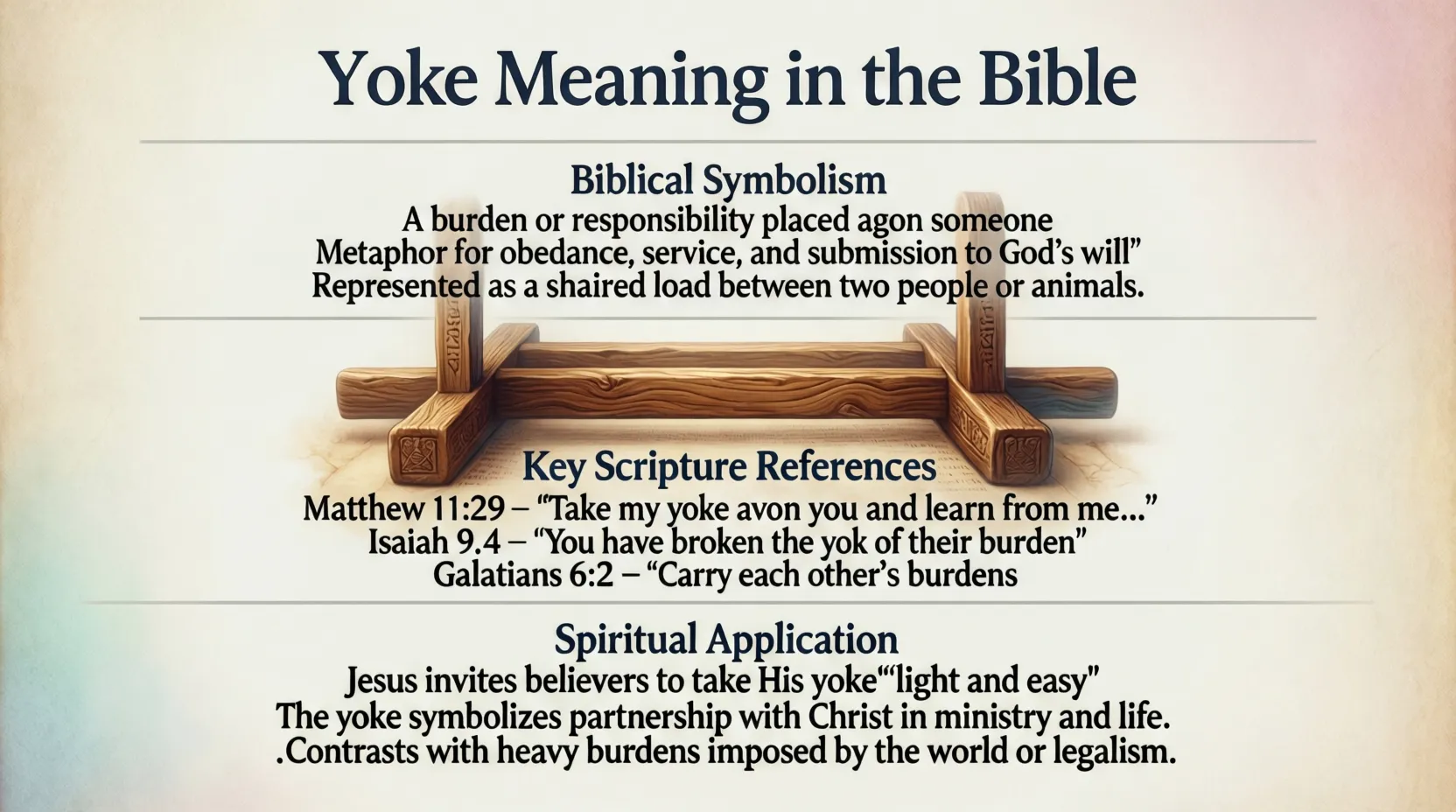
In biblical times, a yoke was a wooden beam placed on animals to help them pull a load together. The Bible uses this image often to explain spiritual truth, especially about authority, submission, and direction.
Yoke as Bondage and Oppression
In many Old Testament passages, the yoke represents slavery, oppression, or heavy control.
- “I broke the bars of your yoke and enabled you to walk with heads held high.” (Leviticus 26:13)
- “Break the yoke of slavery.” (Isaiah 58:6)
Here, the yoke symbolizes human systems or sin that weigh people down. It can mean being trapped under harsh leadership, fear, guilt, or injustice. Spiritually, it reminds us how sin and worldly pressure can control our lives and steal our peace.
Yoke as Obedience and Submission
The Bible also uses the yoke to describe submission to authority, especially God’s law.
- “Serve the king of Babylon and live.” (Jeremiah 27:12)
In this context, wearing a yoke meant accepting God’s discipline for a season. It was not punishment without purpose, but correction meant to restore. This teaches that sometimes obedience feels heavy, but it can still lead to life.
Jesus and the Gentle Yoke
The most comforting meaning appears in the words of Jesus:
“Take my yoke upon you and learn from me, for I am gentle and humble in heart.” (Matthew 11:29)
Here, the yoke becomes a symbol of relationship, not restriction. Jesus invites us to walk with Him. In ancient farming, a young ox was often yoked with a stronger, experienced one. The stronger ox carried most of the weight.
This shows a beautiful truth:
When we take on Christ’s yoke, He carries the heavy part.
Summary of Biblical Meaning
The yoke meaning in the Bible includes:
- Bondage when controlled by sin or people
- Discipline when God is teaching and shaping us
- Partnership when walking with Jesus
The meaning depends on who the yoke comes from.
Spiritual Significance and Symbolism
Spiritually, the yoke speaks about direction and alignment. A yoke always points the animals in one path. In the same way, every person is spiritually yoked to something — fear, ambition, guilt, or faith.
Being Yoked to the Right Source
The Bible warns:
- “Do not be unequally yoked with unbelievers.” (2 Corinthians 6:14)
This verse teaches that who we connect with deeply affects our spiritual journey. Being yoked to Christ brings peace and purpose. Being yoked to unhealthy influences brings confusion and exhaustion.
A Symbol of Surrender and Trust
Taking Jesus’ yoke means:
- Trusting His guidance
- Letting go of control
- Allowing Him to set the pace
This surrender does not weaken us. Instead, it brings spiritual rest. Many believers discover that when they stop carrying life alone and start walking with God, their hearts feel lighter.
Transformation Through the Yoke
The yoke also symbolizes spiritual growth. It teaches patience, humility, and endurance. Through prayer, obedience, and daily faith, God uses the yoke to shape our character.
What once felt heavy becomes meaningful.
What once felt forced becomes peaceful.
This is the quiet spiritual awakening that comes from walking closely with God.
Biblical Interpretations in Dreams or Real Life
Seeing or feeling a yoke in a dream or real experience can carry spiritual meaning.
Yoke in Dreams
- A heavy yoke may represent stress, guilt, or feeling controlled
- A broken yoke often symbolizes freedom, healing, or answered prayer
- A shared yoke can mean divine partnership or support from God
Dreams like these often appear during moments of decision or spiritual struggle. Prayer and reflection help reveal whether God is calling you to release a burden or accept His guidance.
Yoke in Daily Life
In real life, the yoke may show up as:
- Responsibilities that feel overwhelming
- A call to obedience that feels uncomfortable
- A gentle nudge to trust God more deeply
When life feels heavy, the Bible reminds us that Jesus never asks us to walk alone.
Practical Lessons & Faith Insights
The yoke meaning in the Bible teaches us to:
- Release burdens we were never meant to carry
- Choose obedience rooted in love, not fear
- Walk daily with Jesus through prayer and trust
Ask yourself in prayer:
“What am I yoked to, and is it drawing me closer to God?”
Conclusion
The yoke in the Bible is not just a symbol of burden — it is a message of guidance, partnership, and rest. While the world’s yokes exhaust and control, Christ’s yoke heals and restores. When we choose to walk with Him, we discover that obedience can be gentle, faith can be peaceful, and even life’s hardest seasons can carry hope. May you find comfort in knowing that God walks beside you, carrying the weight you no longer have to bear.