Imagine a dark sky filled with heavy clouds. Thunder rolls. Lightning flashes. Everything feels tense and powerful. In moments like this, many people feel fear, awe, and even warning. The Bible often uses similar images when talking about wrath.
Maybe you have read a Bible verse about God’s wrath.
Maybe you dreamed about anger, fire, or judgment.
Or maybe you are struggling with guilt and wondering, “Is God angry with me?”
These thoughts can feel scary. But the wrath meaning in the Bible is deeper and more loving than many people think.
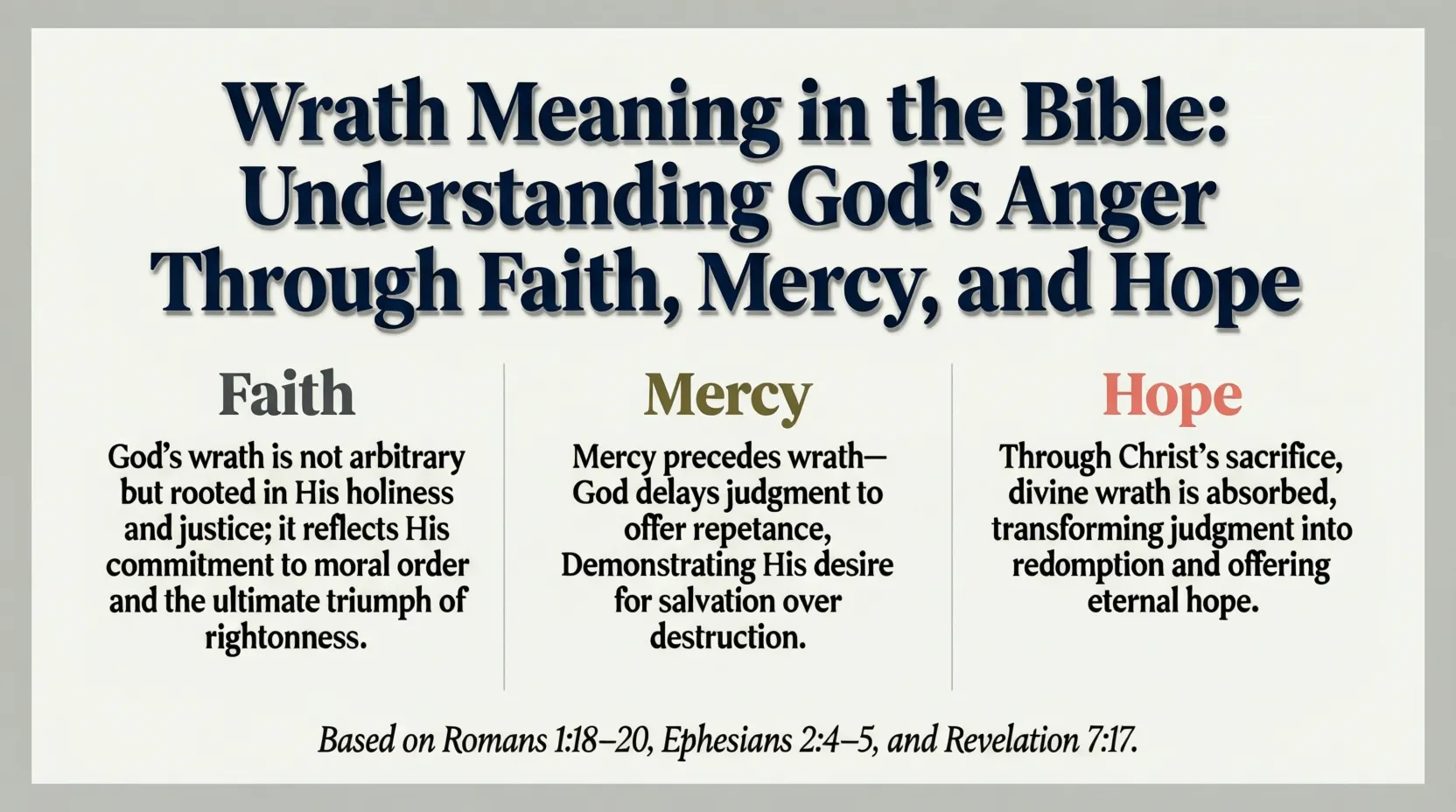
God’s wrath is not like human anger. It is not sudden, cruel, or out of control. Instead, it is holy, just, and always connected to truth and love. It exists because God cares deeply about what is right.
So what does wrath really mean in the Bible?
Is it punishment, warning, or something else?
Let’s gently explore what Scripture teaches and discover the spiritual message behind God’s wrath—and the hope that always follows it.
Biblical Meaning of Wrath in the Bible
In the Bible, wrath means God’s righteous response to sin, injustice, and evil. It shows His deep hatred for what harms people, destroys truth, and pulls hearts away from Him.
“For the wrath of God is revealed from heaven against all ungodliness and unrighteousness of men.”
— Romans 1:18
This verse shows that God’s wrath is not random. It is a reaction to sin, not a desire to hurt.
God’s Wrath Is Righteous, Not Cruel
Human anger is often selfish. We get angry because we are hurt or offended. But God’s wrath comes from holiness. God is pure, loving, and just. He cannot ignore evil forever.
“The Lord is slow to anger and great in power.”
— Nahum 1:3
This verse is important. It reminds us that God is slow to anger. He gives time to repent. He warns before judgment. His wrath comes only after patience.
Wrath as a Warning, Not Just Punishment
In many Bible stories, wrath appears as a warning sign.
- The flood in Noah’s time
- The destruction of Sodom and Gomorrah
- Plagues in Egypt
These events showed what happens when people fully reject God. But before wrath came, God always warned.
“Turn from your evil ways, for why should you die?”
— Ezekiel 33:11
God’s heart is not to destroy. His heart is to save.
Wrath and Justice Go Together
Wrath in the Bible is connected to justice. God defends the weak. He stands against oppression, violence, and lies.
“It is a fearful thing to fall into the hands of the living God.”
— Hebrews 10:31
This verse may sound frightening, but it also shows that God takes sin seriously. Without justice, love would have no meaning.
Wrath and Mercy Are Never Separated
Here is the most important truth: God’s wrath is always balanced by mercy.
“Because of the Lord’s great love we are not consumed.”
— Lamentations 3:22
Even when wrath appears, mercy is close behind. God corrects, not to destroy, but to restore.
Spiritual Significance and Symbolism
Spiritually, wrath represents a wake-up call. It is a strong message that says, “Something needs to change.”
Wrath is not meant to push you away from God. It is meant to pull you back.
Wrath as Spiritual Correction
Just like a loving parent disciplines a child, God corrects His people when they walk toward harm.
“The Lord disciplines the one He loves.”
— Hebrews 12:6
Spiritually, wrath can mean:
- God is calling you to repent
- God is exposing hidden sin
- God is protecting you from deeper damage
Wrath and Transformation
Wrath can lead to spiritual awakening. When people realize the seriousness of sin, they often turn back to God with humble hearts.
Think of Jonah and Nineveh. God warned of destruction. The people repented. And God withdrew His wrath.
This shows that wrath is not the end. Repentance changes everything.
Wrath Reveals God’s Presence
Even in wrath, God is present. Silence would be worse. Wrath means God still cares enough to respond.
Spiritually, it reminds believers that:
- God is alive
- God sees everything
- God desires holiness in our lives
Biblical Interpretations in Dreams or Real Life
Sometimes people dream of anger, fire, storms, or judgment and wonder if it relates to God’s wrath.
These dreams are often symbolic, not literal.
Wrath in Dreams
If wrath appears in a dream, it may mean:
- A conviction about sin
- A call to change direction
- Inner conflict between faith and behavior
A stormy or fearful dream may point to guilt or spiritual struggle.
A dream where wrath passes and peace follows often shows forgiveness and renewal.
Wrath in Real Life Experiences
In real life, moments of loss, correction, or hardship can feel like wrath. But the Bible teaches us to seek God’s message, not assume punishment.
“In your anger do not sin.”
— Ephesians 4:26
Prayer helps bring clarity. God speaks gently to hearts that listen.
Practical Lessons & Faith Insights
The wrath meaning in the Bible teaches us to take sin seriously but never lose hope. God invites repentance, prayer, and trust. Instead of fear, respond with humility. Instead of guilt, seek forgiveness. God’s correction is proof of His deep love and desire to guide you back to peace.
Conclusion
Wrath in the Bible is not about hatred—it is about holiness, justice, and love. It warns, corrects, and leads hearts back to God. When understood through Scripture, wrath becomes a divine message, not a threat. God’s anger lasts a moment, but His mercy lasts forever. Trust Him, pray sincerely, and walk forward knowing His guidance always leads to hope and restoration.