Think about a quiet moment when your heart feels close to God. Maybe it happens during a song, a prayer, or even in silence. In that moment, you are not asking for anything—you are simply acknowledging who God is. This is the heart of worship.
Many people search for the worship meaning in the Bible because they want to know if worship is only about singing in church or if it is something deeper. Others feel drawn to worship during hard seasons and wonder, What does God truly desire from me?
In the Bible, worship is not a performance. It is not limited to a place, a time, or a style. Worship is a response of love, surrender, and reverence toward God. It flows from recognizing His holiness, mercy, and faithfulness.
When Scripture speaks about worship, it invites believers into a relationship—not a ritual. To understand the worship meaning in the Bible, we must explore how God defines worship and how it shapes a believer’s daily life.
Biblical Meaning of Worship
The biblical meaning of worship goes far beyond outward actions. It begins in the heart and flows into every part of life.
Meaning of the Word Worship
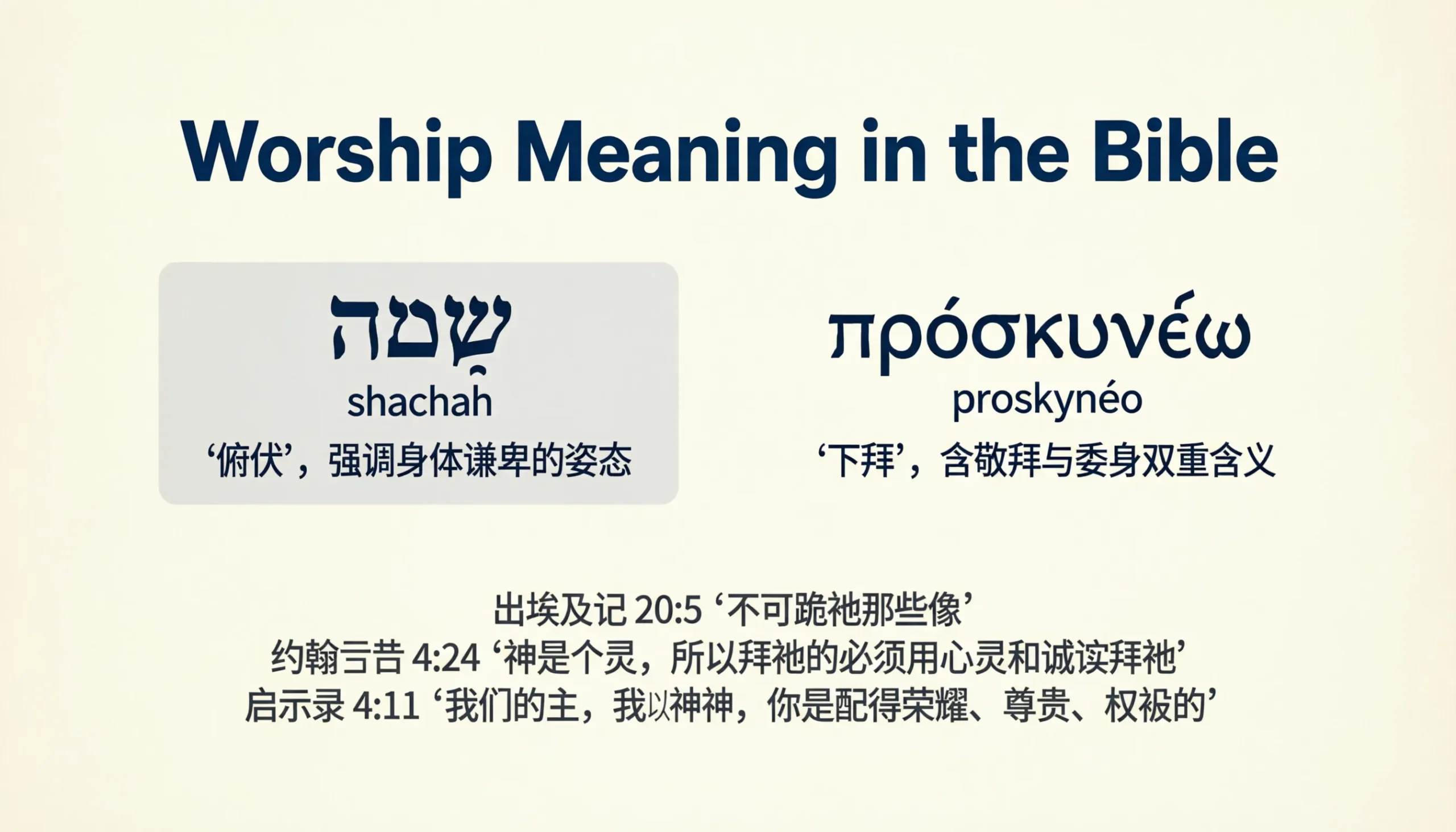
In the Old Testament, the Hebrew word for worship is “shachah,” which means:
- To bow down
- To humble oneself
- To show reverence
In the New Testament, the Greek word “proskuneo” means:
- To kneel
- To show honor
- To express devotion
Both words show that worship is about honoring God with humility and love.
Worship in Spirit and Truth
Jesus clearly explains true worship in John 4:23–24:
“Yet a time is coming and has now come when the true worshipers will worship the Father in the Spirit and in truth.”
This teaches that:
- Worship is guided by the Holy Spirit
- Worship is rooted in God’s truth
- Worship is not limited by location
Worship as Obedience
The Bible often connects worship with obedience.
In 1 Samuel 15:22, Samuel says:
“To obey is better than sacrifice.”
This shows that worship includes:
- Listening to God
- Following His ways
- Trusting His commands
True worship is lived, not just spoken.
Spiritual Significance and Symbolism
The spiritual symbolism of worship reflects surrender, love, and transformation.
A Heart Surrendered to God
Spiritually, worship means:
- Placing God above all else
- Letting go of pride and fear
- Trusting God fully
When a believer worships, they declare that God alone is worthy.
Worship as Relationship
Worship is not about impressing God. It is about connecting with Him.
Psalm 95:6 says:
“Come, let us bow down in worship, let us kneel before the Lord our Maker.”
This verse shows intimacy, not obligation.
Worship Brings Transformation
When worship becomes a lifestyle, it:
- Changes attitudes
- Brings peace in trials
- Draws believers closer to God
Worship aligns the heart with God’s will.
Biblical Interpretations in Dreams or Real Life
Some believers experience worship themes in dreams or significant moments.
Dreaming of Worship
From a Christian perspective, dreaming of worship may symbolize:
- A longing for God’s presence
- Spiritual renewal
- God calling you deeper into prayer
Emotional Tone Matters
- Joyful worship: Spiritual freedom and gratitude
- Silent worship: Trust and surrender
- Forced worship: Need for healing or honesty with God
In real life, a growing desire to worship often signals a spiritual awakening.
Practical Lessons & Faith Insights
The worship meaning in the Bible encourages believers to:
- Worship God daily, not occasionally
- Honor God through obedience
- Offer their whole life as worship
Every act done in love can become worship.
Conclusion
The worship meaning in the Bible reveals that worship is not confined to songs or sermons—it is a life fully surrendered to God. True worship honors God with heart, mind, and actions.
When you worship in spirit and truth, you invite God’s presence into every part of your life.
Live in worship, and let your life glorify God.