Some biblical images stay with us long after we read them. The Tree of Life is one of those powerful symbols. You may have come across it while reading Genesis or Revelation, heard it mentioned in a sermon, or felt drawn to it during prayer or reflection. When this happens, many believers wonder: What does the Tree of Life really mean in the Bible? Why does it appear at both the beginning and the end of Scripture?
The Tree of Life is more than a plant or symbol. In the Bible, it represents God’s desire to give life, healing, and eternal fellowship with His people. It appears in moments of creation, loss, and restoration. It speaks softly of what humanity once had, what was broken, and what God promises to restore.
If you are searching for the Tree of Life meaning in the Bible, you may be longing for hope, renewal, or a deeper understanding of God’s plan. Let’s explore this beautiful biblical symbol and uncover the spiritual message it holds for faith, healing, and eternal life.
Biblical Meaning of the Tree of Life
The Tree of Life first appears in the Garden of Eden:
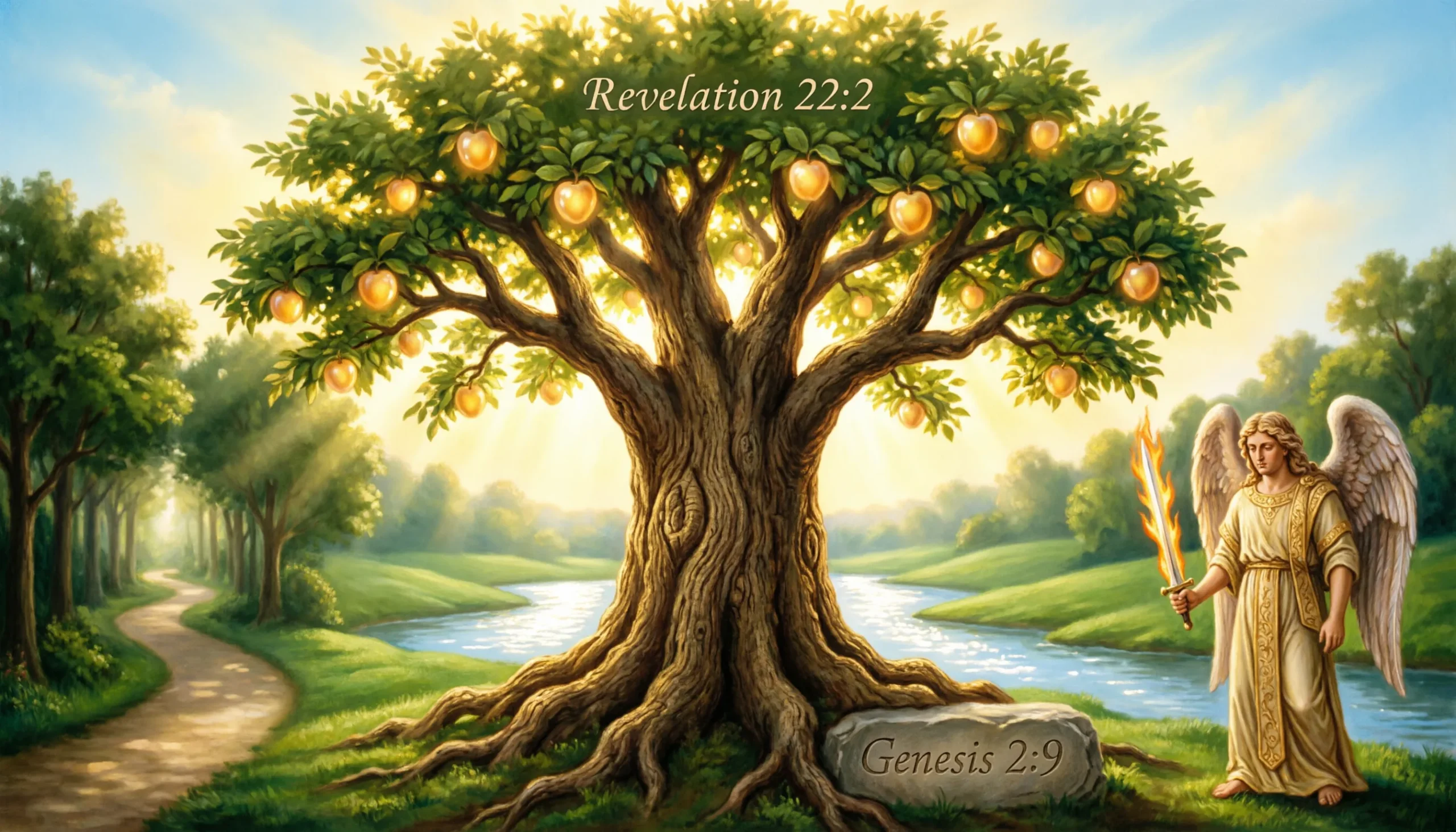
“And out of the ground the Lord God made to spring up every tree that is pleasant to the sight and good for food. The tree of life was in the midst of the garden.” — Genesis 2:9
Biblically, the Tree of Life represents God’s life-giving presence. It was a symbol of perfect communion between God and humanity. As long as Adam and Eve walked in obedience, they had access to life, peace, and closeness with God.
After sin entered the world, access to the Tree of Life was removed:
“He drove out the man, and at the east of the garden of Eden He placed the cherubim… to guard the way to the tree of life.” — Genesis 3:24
This was not punishment alone—it was protection. Eternal life in a broken state would have meant endless suffering. God’s removal of access pointed forward to a future restoration.
Tree of Life in the Book of Revelation
The Tree of Life appears again at the end of the Bible:
“On either side of the river was the tree of life… and the leaves of the tree were for the healing of the nations.” — Revelation 22:2
Here, the Tree of Life symbolizes eternal life restored, complete healing, and renewed fellowship with God. What was lost in Genesis is fully restored in Revelation through Christ.
Core Biblical Meanings
In Scripture, the Tree of Life represents:
- Eternal life from God
- Spiritual nourishment
- Healing and restoration
- God’s presence with His people
Jesus fulfills this promise of life:
“I am the way, and the truth, and the life.” — John 14:6
Spiritual Significance and Symbolism
Spiritually, the Tree of Life symbolizes true life that comes only from God. It reminds believers that life is not sustained by human strength alone, but by remaining connected to God.
The spiritual symbolism includes:
- Growth through faith
- Healing of the soul
- Hope beyond suffering
- Spiritual nourishment through God’s Word
Proverbs also uses the image symbolically:
“The fruit of the righteous is a tree of life.” — Proverbs 11:30
This shows that when faith is rooted in God, it produces life—not only for ourselves, but for others.
In personal faith journeys, the Tree of Life often represents a longing to return to peace, wholeness, and closeness with God. It reminds believers that God’s ultimate plan is restoration, not separation.
Biblical Interpretations in Dreams or Real Life
When the Tree of Life appears in dreams, it often carries a comforting message.
- Healthy, green tree: spiritual growth, healing, and renewal
- Fruit-bearing tree: answered prayers or spiritual fruit
- Tree near water: God’s presence sustaining life
In real life, reflecting on the Tree of Life may happen during seasons of healing or spiritual renewal. Biblically, God often uses nature imagery to reassure His people:
“He is like a tree planted by streams of water.” — Psalm 1:3
These moments often point to God restoring strength, faith, and hope.
Practical Lessons & Faith Insights
- Stay rooted in God’s Word and prayer
- Trust God’s promise of eternal life through Christ
- Seek spiritual growth that produces healing and peace
- Remember that God restores what was broken
The Tree of Life reminds believers that life with God is full and everlasting.
Conclusion
The Tree of Life meaning in the Bible reveals God’s heart for humanity—life, healing, and eternal fellowship. From Eden to eternity, it tells a story of loss, redemption, and restoration. Though access was once broken by sin, God made a way through Jesus Christ to restore eternal life.
If the Tree of Life has stood out to you, take it as a message of hope. God is restoring, healing, and inviting you into deeper life with Him. Stay rooted in faith, and trust that His promise of life—full and eternal—is still unfolding for you.