Imagine standing on a high mountain, looking down at everything below. For a moment, it feels powerful. You feel strong, confident, and in control. But then the wind blows harder, and you realize how small you really are. This image reflects pride as shown in the Bible.
Many people feel pride after success, recognition, or personal growth. Sometimes it even appears in dreams—standing taller than others, being praised, or feeling superior. It can feel good at first. But deep inside, a quiet question rises: Is this from God, or is it a warning?
So what is the pride meaning in the Bible? Is pride always bad, or is there a form that honors God? Why does Scripture speak so strongly against it? And how does pride affect our faith, prayer, and relationship with God?
The Bible treats pride not just as a feeling, but as a spiritual condition of the heart. Sometimes it comes quietly, dressed as confidence. Other times, it stands boldly as arrogance. Understanding its biblical meaning helps us recognize God’s divine message, especially when pride shows up in our thoughts, actions, or dreams.
Let’s explore what the Bible truly says about pride—and what God lovingly calls us to instead.
Biblical Meaning of Pride
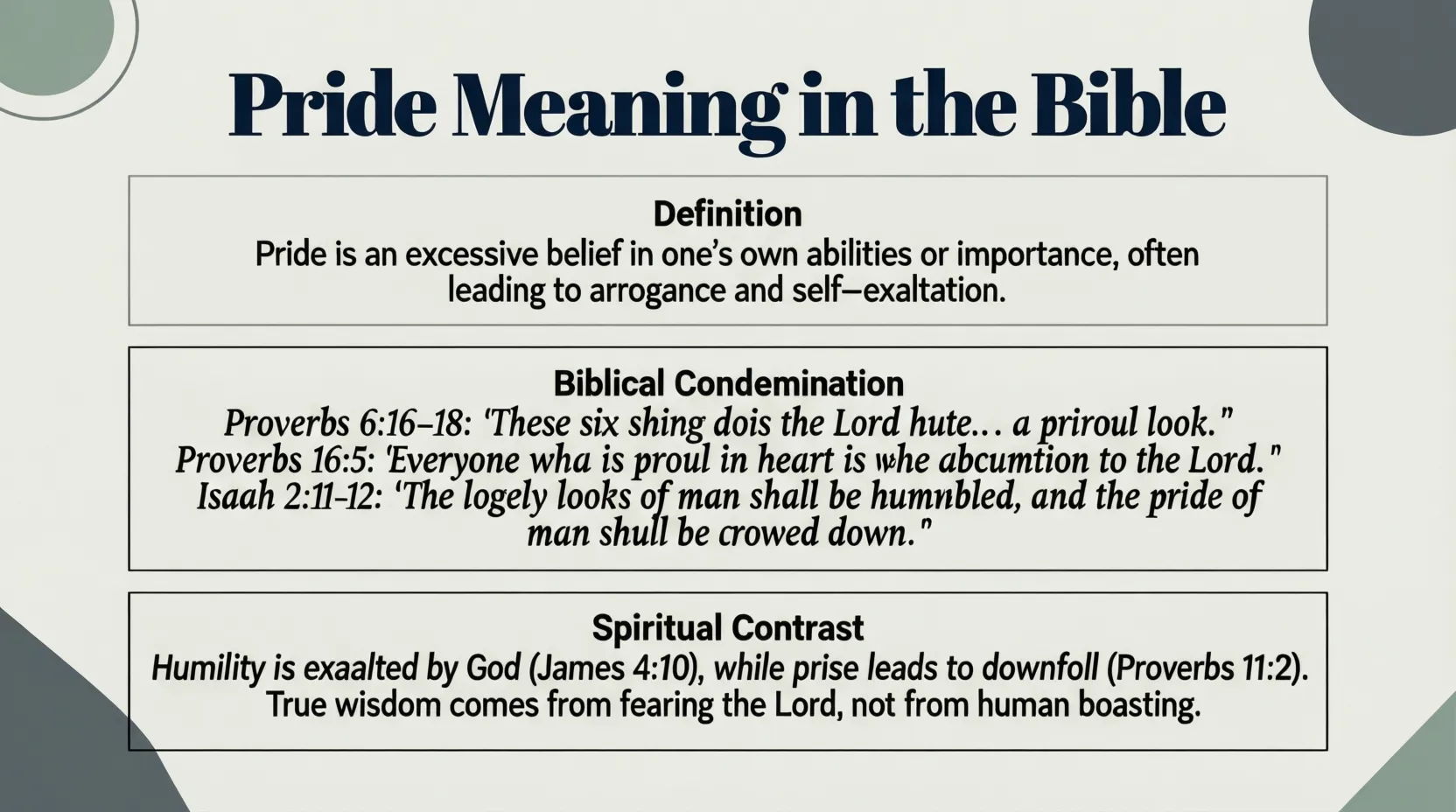
In the Bible, pride is most often seen as a warning, not a virtue. It describes a heart that lifts itself above God or others. Scripture repeatedly shows that pride separates people from God’s presence.
One of the clearest verses says:
“Pride goes before destruction, a haughty spirit before a fall.” (Proverbs 16:18)
This verse reveals the core biblical symbolism of pride: it leads to downfall. Pride convinces a person they don’t need God. It whispers, “I can do this on my own.”
Pride as Self-Exaltation
Biblically, pride means placing oneself above God’s authority. A powerful example is Lucifer:
“You said in your heart, ‘I will ascend to the heavens; I will raise my throne above the stars of God.’” (Isaiah 14:13)
Lucifer’s pride led to his fall. This story teaches that pride begins in the heart and grows when unchecked.
Another example is King Nebuchadnezzar. He praised his own power instead of God’s:
“Is not this the great Babylon I have built by my mighty power?” (Daniel 4:30)
Immediately, God humbled him. The message is clear: God opposes pride, but restores those who humble themselves.
Is All Pride Sinful?
The Bible makes a distinction. Being thankful for God’s work in your life is not sinful. But boasting without God is.
“Let the one who boasts boast in the Lord.” (1 Corinthians 1:31)
So the Christian meaning of pride is not confidence rooted in God, but self-glory that pushes God aside.
God’s Response to Pride
Scripture is consistent:
- God resists the proud (James 4:6)
- God humbles the exalted (Luke 14:11)
- God lifts the humble (1 Peter 5:6)
Pride blocks guidance, prayer, and spiritual growth. Humility opens the door to God’s grace.
Spiritual Significance and Symbolism
Spiritually, pride represents a closed heart. It stops listening. It stops learning. It stops trusting God fully.
Pride often shows up during seasons of success. You pray less. You rely more on yourself. Slowly, the presence of God feels distant—not because God left, but because pride built a wall.
In spiritual symbolism, pride is linked to:
- Hardness of heart
- Spiritual blindness
- False security
But pride also carries a loving spiritual warning. When God exposes pride, it’s an invitation to transformation, not shame.
A Call to Humility
Humility is not thinking less of yourself—it’s thinking less about yourself and more about God.
Jesus Himself modeled this:
“He humbled Himself by becoming obedient to death.” (Philippians 2:8)
Spiritually, pride asks, “What do I deserve?”
Humility asks, “What does God desire?”
When pride is released, spiritual awakening begins. Prayer becomes deeper. Faith becomes stronger. God’s divine guidance becomes clearer.
Biblical Interpretations in Dreams or Real Life
When pride appears in dreams, it often carries a spiritual message.
- Dreaming of being praised or elevated may reveal hidden pride or a test of humility.
- Dreams of falling from a high place often reflect God’s warning against self-exaltation.
- Feeling powerful but alone in a dream may point to pride isolating you from others or God.
In real life, pride may show up as:
- Difficulty accepting correction
- Feeling superior in faith or knowledge
- Resisting prayer or repentance
These moments are not condemnation. They are gentle nudges from God calling the heart back to humility and trust.
Prayer is the key response. Ask God to reveal pride and replace it with peace, surrender, and faith.
Practical Lessons & Faith Insights
- Ask God daily to search your heart
- Give credit to God for every success
- Practice gratitude and humility in prayer
- Stay teachable and open to correction
Humility keeps you close to God. Pride pushes Him away.
Conclusion
The pride meaning in the Bible is clear: pride is a spiritual danger that leads the heart away from God. But humility brings grace, healing, and divine favor. When pride is surrendered, faith grows stronger, prayer becomes deeper, and God’s presence becomes clearer.
Let pride be a signal—not of failure, but of a moment to return to God with humility. In doing so, you open your life to His guidance, peace, and transforming love.