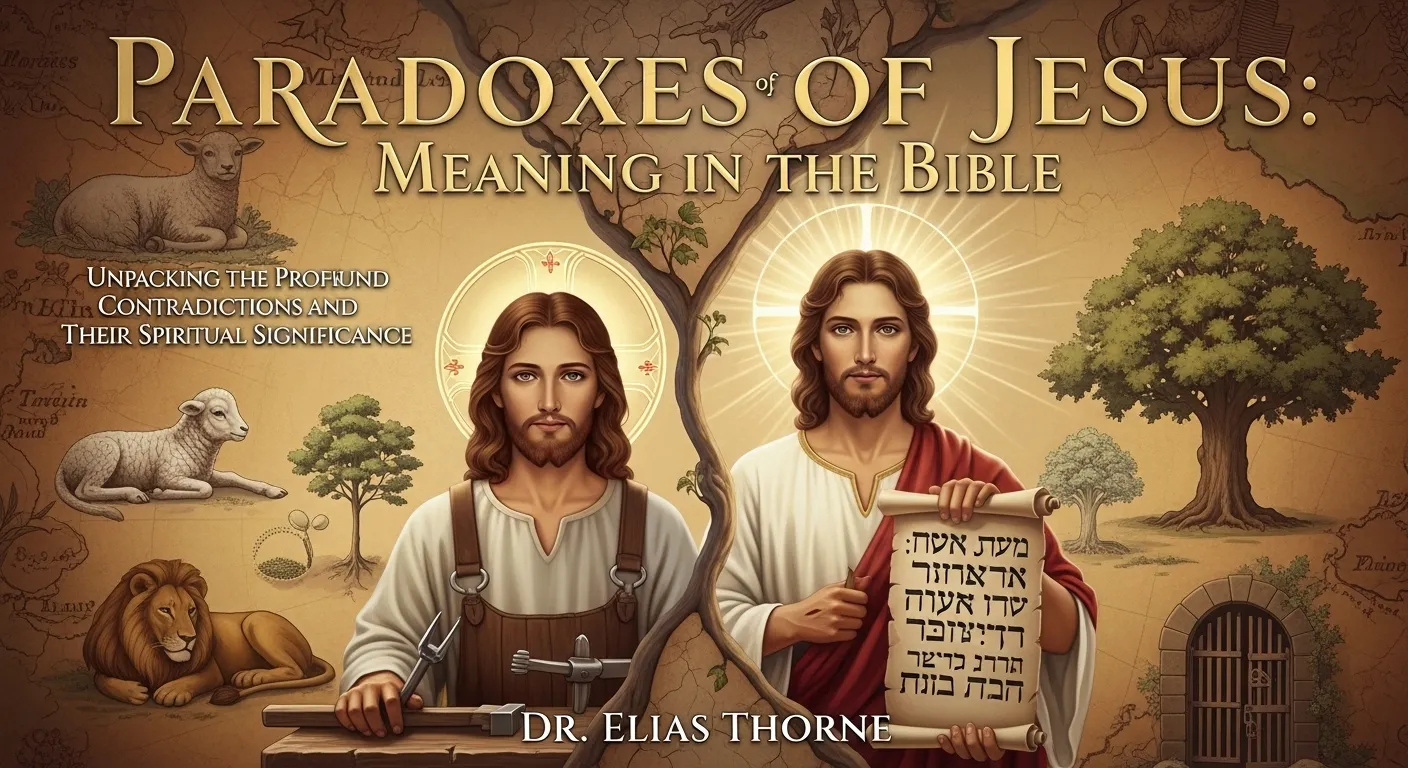
Have you ever read the words of Jesus and felt surprised by what He said?
Jesus often spoke in ways that seemed opposite to human thinking. He said things like, “Whoever wants to save their life will lose it, but whoever loses their life for me will find it” (Matthew 16:25). At first, these words sound confusing. How can losing lead to finding? How can weakness become strength?
These are known as the paradoxes of Jesus. A paradox is a statement that seems to contradict itself but reveals a deeper truth. Throughout the Bible, Jesus used paradoxes to help people see God’s wisdom instead of human wisdom.
The Paradoxes of Jesus meaning in the Bible goes far beyond clever sayings. These teachings reveal God’s kingdom, His love, and His plan for our lives. They challenge pride, encourage faith, and invite believers to trust God’s ways even when they do not make sense at first.
Many Christians are drawn to these paradoxes because they offer a powerful spiritual message. They remind us that God’s thoughts are higher than our thoughts and His ways are greater than our ways.
So what do these paradoxes mean in Scripture, and how can they strengthen your faith today? Let’s explore their biblical meaning and spiritual significance.
Biblical Meaning of Paradoxes of Jesus
What Is a Biblical Paradox?
A paradox in the Bible is not a mistake or contradiction. Instead, it is a truth that appears impossible until viewed through God’s perspective.
Jesus often used paradoxes because His kingdom operates differently from the world. Human wisdom says one thing, but God’s wisdom often reveals another path.
As Isaiah 55:8 says:
“For my thoughts are not your thoughts, neither are your ways my ways,” declares the Lord.
The paradoxes of Jesus teach believers to trust God’s truth rather than relying only on human understanding.
The First Shall Be Last
One of Jesus’ most famous paradoxes appears in Matthew 20:16:
“So the last will be first, and the first will be last.”
The world teaches people to seek status, power, and recognition. Jesus taught humility instead.
This paradox shows that in God’s kingdom, faithful service matters more than earthly position. Those who humbly serve others often receive great honor from God.
Biblical symbolism: humility, surrender, servant leadership, and heavenly reward.
Losing Your Life to Find It
Jesus said:
“Whoever finds their life will lose it, and whoever loses their life for my sake will find it.” (Matthew 10:39)
This statement sounds impossible at first.
Jesus was teaching that people discover their true purpose when they surrender their lives to God. Chasing selfish desires often leaves people empty. Following Christ brings lasting peace and eternal life.
This paradox carries a powerful Christian meaning about sacrifice and spiritual fulfillment.
Strength Through Weakness
The Bible repeatedly teaches that God’s strength appears through human weakness.
The Apostle Paul wrote:
“When I am weak, then I am strong.” (2 Corinthians 12:10)
Jesus demonstrated this truth through His life and death. What appeared to be defeat at the cross became the greatest victory in history.
This paradox reminds believers that God often works through brokenness, struggles, and difficult seasons.
The Greatest Must Be a Servant
In Mark 10:43-44, Jesus taught:
“Whoever wants to become great among you must be your servant.”
Most people think greatness comes from being served. Jesus taught that true greatness comes from serving others.
This paradox reveals the heart of Christ. He came not to be served but to serve and give His life for humanity.
Death Leads to Life
One of the deepest paradoxes of Jesus is found in John 12:24:
“Unless a kernel of wheat falls to the ground and dies, it remains only a single seed.”
Jesus used this image to describe His own death and resurrection.
The cross looked like defeat. Yet through His death came salvation, hope, and eternal life.
For believers, this paradox teaches that spiritual growth often comes through surrender, letting go, and trusting God during difficult transitions.
Positive and Warning Meanings
The paradoxes of Jesus carry both encouragement and warning.
Positive meanings include:
- Hope in difficult situations
- Faith beyond human understanding
- Spiritual awakening
- Transformation through God’s power
- Divine guidance in uncertain times
Warning meanings include:
- Pride can blind people to God’s truth.
- Self-reliance can replace dependence on God.
- Earthly success may distract from eternal priorities.
- Comfort can sometimes hinder spiritual growth.
These teachings invite believers to examine their hearts and seek God’s wisdom.
Spiritual Significance and Symbolism
The spiritual symbolism behind Jesus’ paradoxes points to a life transformed by faith.
Many people naturally seek control, recognition, and security. Yet Jesus repeatedly called His followers to trust God instead.
This creates a powerful spiritual lesson: God often works through what seems impossible.
For example:
- Surrender leads to freedom.
- Humility leads to honor.
- Giving leads to blessing.
- Serving leads to greatness.
- Trusting leads to peace.
These truths may seem upside down, but they reflect how God’s kingdom operates.
In daily life, a believer may experience this during hardship. A season of loss may eventually produce deeper faith. A difficult challenge may become a testimony of God’s faithfulness.
The paradoxes of Jesus encourage believers to look beyond temporary circumstances and focus on God’s greater purpose.
They also remind Christians that spiritual growth is often a journey of faith, prayer, and dependence on God’s presence.
Rather than asking, “Why is this happening?” believers can begin asking, “What is God teaching me through this?”
That shift often leads to greater peace and spiritual maturity.
Biblical Interpretations in Dreams or Real Life
Some people encounter the paradoxes of Jesus through Bible study, personal experiences, or even dreams.
In dreams, paradoxical images may appear as situations that seem impossible or confusing. For example:
- Losing something valuable but feeling peace afterward.
- Falling but somehow being protected.
- Being weak yet accomplishing great things.
- Serving others and receiving unexpected blessings.
These dream symbols may reflect a spiritual message that God is teaching trust, humility, or surrender.
In real life, paradoxes often appear during difficult seasons.
A person may experience loss but gain stronger faith. Someone may face weakness but discover God’s strength. A humble servant may become a powerful influence for Christ.
If such experiences occur, believers should seek wisdom through prayer, Scripture, and God’s guidance.
The goal is not to fear confusion but to trust that God often reveals His greatest truths in unexpected ways.
Practical Lessons & Faith Insights
The paradoxes of Jesus teach believers to:
- Trust God even when life seems confusing.
- Choose humility over pride.
- Serve others with love.
- Depend on God’s strength instead of their own.
- Remember that God’s plans are often greater than human understanding.
Spend time in prayer, read Scripture regularly, and ask God to reveal His wisdom in everyday situations.
Conclusion
The Paradoxes of Jesus meaning in the Bible reveals the beautiful truth that God’s kingdom often works differently from the world. What seems impossible, weak, or backward can become a source of blessing, growth, and spiritual transformation.
Jesus used paradoxes to open hearts to deeper faith and greater understanding. His teachings remind believers that God’s wisdom surpasses human logic and that His plans are always good.
As you reflect on these powerful truths, trust that God is guiding your journey. Even when life does not make sense, His love, wisdom, and purpose remain constant. Walk forward in faith, knowing that God’s deeper truth is often waiting just beyond what the eyes can see.