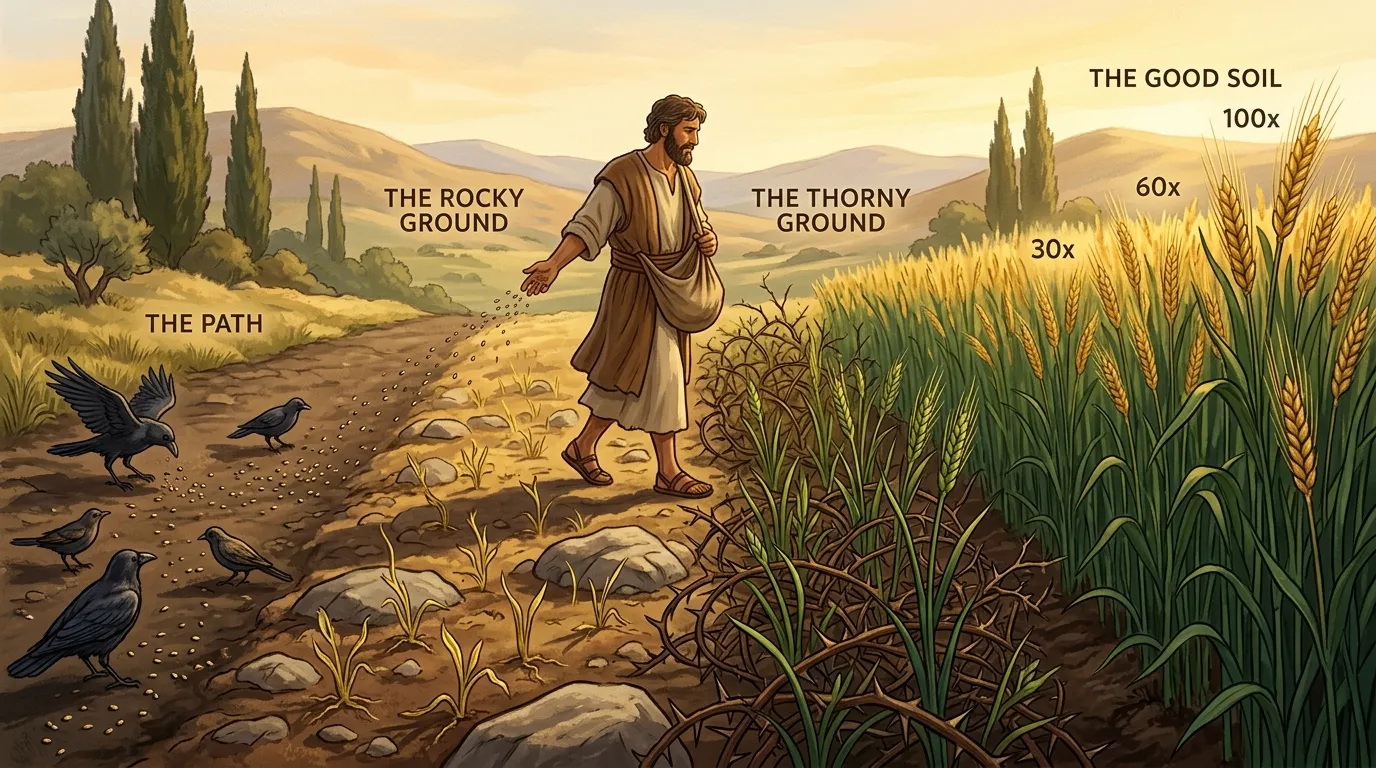
Have you ever planted a seed and wondered if it would grow? A tiny seed may look small and weak, but with the right soil, water, and care, it can become something beautiful. This simple picture is the heart of one of the most powerful teachings of Jesus: the Parable of the Sower.
Many people search for the Parable of the sower meaning in the Bible because they want to understand its deeper message. They may wonder what the seed, the soil, and the harvest represent. They may also feel that God is showing them something about their own faith journey.
In this parable, Jesus uses a farmer planting seeds to reveal a spiritual truth about the Word of God, the human heart, and the way people respond to God’s message. The story is not only about farming. It is about faith, transformation, and the condition of our hearts.
What does this famous Bible story really mean? What is the spiritual message behind the seeds and the soil? Let’s explore the biblical meaning and how it connects to our daily walk with God.
Biblical Meaning of the Parable of the Sower in the Bible
The Parable of the Sower is found in Gospel of Matthew 13:3–23, Gospel of Mark 4:1–20, and Gospel of Luke 8:4–15. Jesus tells about a farmer who scatters seeds on different types of ground.
The seed falls in four places:
- The path
- Rocky ground
- Among thorns
- Good soil
Jesus later explains that the seed represents the Word of God. The different soils represent how people receive and respond to God’s truth.
The Seed on the Path: A Heart Closed to God
Some seeds fall along the path, and birds eat them. Jesus explains that this represents people who hear God’s Word but do not understand it. The enemy takes away what was planted in their hearts.
This teaches an important lesson about spiritual awareness. Sometimes a person may hear God’s message but allow distractions, doubt, or hardness of heart to block it.
The biblical symbolism here is a reminder to protect our hearts and stay open to the presence of God.
The Seed on Rocky Ground: Faith Without Deep Roots
The second seed falls on rocky soil. It grows quickly but dies when the sun becomes hot because it has no deep roots.
Jesus explains that this represents people who receive God’s Word with joy but fall away when troubles come.
This part of the parable shows that true faith needs more than emotion. A strong relationship with God requires prayer, patience, and spiritual growth.
Life will bring challenges, but deep roots in God help believers remain strong.
The Seed Among Thorns: Faith Choked by Worldly Worries
The third seed grows among thorns, but the thorns choke the plant.
Jesus says this represents people who hear God’s Word, but the worries of life, wealth, and worldly desires prevent spiritual growth.
The message is not that having responsibilities or dreams is wrong. Instead, Jesus warns that anything placed above God can weaken our faith.
This teaches believers to seek balance and remember that God’s guidance is more valuable than temporary things.
The Seed on Good Soil: A Heart Ready for God
The final seed falls on good soil and produces a great harvest.
Jesus explains that this represents people who hear God’s Word, understand it, and live according to it.
This is the heart God desires — a heart that receives truth, grows in faith, and shares His love with others.
The christian meaning of the good soil is about spiritual transformation. When we allow God to work in us, our lives can produce love, kindness, patience, and hope.
Spiritual Significance and Symbolism of the Parable
The spiritual symbolism of the Parable of the Sower is about the relationship between God and the human heart.
The farmer represents the one sharing God’s message. The seed represents the truth of God. The soil represents our inner life — our thoughts, choices, and willingness to follow Him.
This parable teaches that God’s Word is powerful, but our response matters.
A person may hear the same message but respond differently. One may ignore it, another may accept it for a short time, and another may allow it to completely change their life.
The deeper spiritual message is that God is always planting seeds of truth, love, and hope. The question is: Are we allowing those seeds to grow?
For example, someone may pray during a difficult season and feel God’s comfort. Another person may read a Bible verse and find new strength. These moments are like seeds planted in the heart.
Over time, faith grows through:
- Prayer
- Trust in God
- Learning Scripture
- Showing love to others
- Staying faithful during trials
The parable encourages a spiritual awakening where believers examine their hearts and invite God to bring growth and renewal.
Biblical Interpretations in Dreams or Real Life
Some people wonder about the dream interpretation of seeds, planting, farming, or harvest. In a biblical sense, these images can represent growth, preparation, and God’s work in a person’s life.
Dreaming about planting seeds may remind someone of a new spiritual season or a step of faith. Seeing a harvest may symbolize blessings, progress, or the results of trusting God.
However, the Bible encourages believers to seek wisdom and prayer when understanding personal experiences. Not every dream has a direct spiritual meaning, but God can use moments of reflection to guide our hearts.
A peaceful dream about growth may represent hope and renewal. A troubling dream may encourage self-examination and a return to God’s guidance.
The most important message remains the same: God invites us to become good soil where His truth can grow.
Practical Lessons and Faith Insights
The Parable of the Sower reminds us to care for our hearts. Spend time in prayer, stay close to God’s Word, and remove anything that keeps your faith from growing. Trust that God can bring transformation in His perfect timing.
Conclusion
The Parable of the sower meaning in the Bible is a powerful reminder that God’s Word is like a seed full of life and hope. The condition of our hearts determines how that seed grows.
Jesus teaches that a heart open to God can experience deep faith, spiritual growth, and lasting change. As we seek His guidance, may our lives become good soil where His love and truth can flourish.