Have you ever woken up from a dream filled with symbols of trust, surrender, or divine presence and wondered what it all means? Or perhaps you’ve wrestled with doubt during a difficult season and asked yourself what faith in the Bible truly looks like. Faith is more than a religious word—it is a deep emotional experience, a spiritual anchor, and even a psychological force that shapes how we see the world.
Understanding the meaning of faith in the Bible opens a doorway to spiritual growth, emotional resilience, and mental clarity. Whether explored through Scripture, psychology, or even neuroscience, faith reveals itself as a powerful inner reality that influences thoughts, dreams, behaviors, and life decisions.
In this comprehensive guide, we’ll explore the spiritual meaning of faith, its symbolic presence in dreams, its psychological interpretations (including Freudian and Jungian perspectives), scientific insights about belief and the brain, and practical reflection tools to deepen your understanding.
What Is the Meaning of Faith in the Bible?
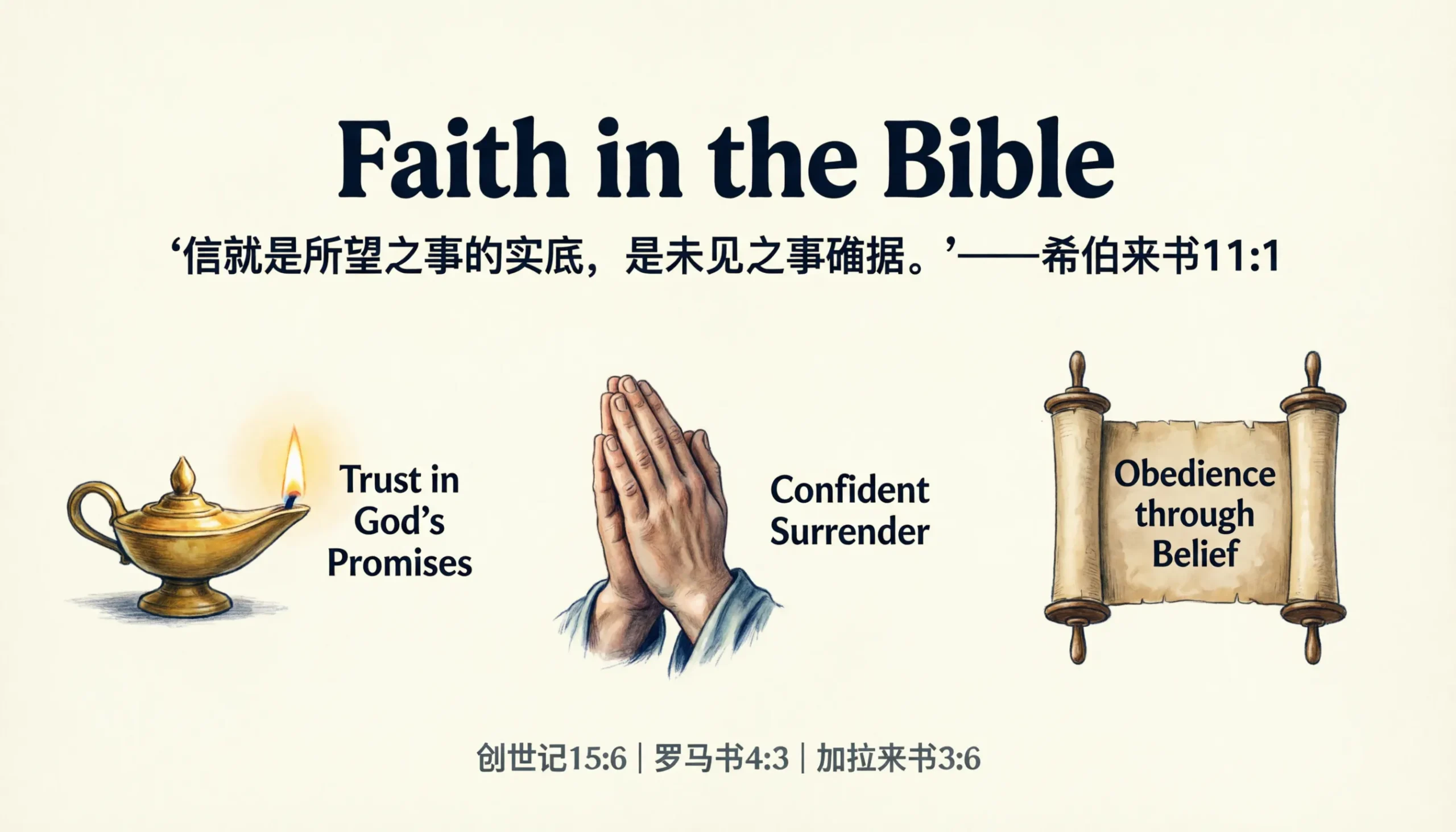
In the Bible, faith is not merely intellectual agreement. It is trust, confidence, and active reliance on God.
One of the clearest definitions appears in Hebrews 11:1, which describes faith as the assurance of things hoped for and the conviction of things not seen. This verse highlights two key elements:
- Hope in unseen promises
- Confidence without visible proof
Another foundational passage is Romans 10:17, which explains that faith comes through hearing the Word of God. This suggests faith is both spiritually inspired and relational—it grows through connection with divine truth.
Throughout Scripture, figures like Abraham demonstrate faith as obedience and trust even in uncertainty.
The Spiritual Meaning of Faith
Spiritually, faith represents:
- Surrender to divine guidance
- Trust beyond physical evidence
- Alignment with God’s will
- Inner peace during chaos
Faith is often symbolized as:
- A mustard seed (small yet powerful)
- A shield (protection against doubt)
- A foundation (stability during storms)
Spiritually, faith acts as a bridge between the visible and invisible realms, connecting earthly experience to divine purpose.
Faith and Dreams: Emotional and Spiritual Connection
Sometimes people dream about praying, walking on water, falling but being caught, or seeing light breaking through darkness. These dream themes can reflect faith-related emotions such as:
- Trust
- Fear of losing control
- Hope
- Surrender
- Renewal
Dreams involving faith often symbolize an inner process:
- Seeking guidance
- Wrestling with doubt
- Moving toward spiritual awakening
In this sense, dreams become a mirror of spiritual development.
Symbolism of Faith in Different Dream Scenarios
1. Praying in a Dream
Symbolizes a search for reassurance, support, or connection with higher meaning.
2. Walking on Water
Reflects stepping beyond fear and trusting in unseen support.
3. Falling but Not Hitting the Ground
Represents surrender and trust that you will be “caught” in difficult times.
4. Darkness Turning into Light
Symbolizes hope emerging from confusion or spiritual uncertainty.
Gradual Realization vs. Sudden Reaction in Faith
Faith often develops in two ways:
Gradual Realization
- Slow spiritual growth
- Learning through experience
- Building trust over time
- Processing doubts thoughtfully
This resembles steady emotional development.
Sudden Reaction
- A powerful spiritual awakening
- Immediate trust after crisis
- Dramatic life change
- Emotional breakthrough
Both pathways are valid and often reflect different personality styles and life circumstances.
Psychological Interpretations of Faith
Freudian Perspective
From a Freudian lens inspired by Sigmund Freud, faith may be seen as:
- A projection of parental authority
- A coping mechanism for fear
- A subconscious desire for protection
Freud viewed religion as a psychological comfort system that reduces anxiety.
Jungian Perspective
In contrast, Carl Jung believed faith connects to the collective unconscious.
For Jung, faith represents:
- An archetype of the Self
- Integration of conscious and unconscious mind
- A journey toward wholeness
Dreams about faith symbols may reflect personal transformation.
Energy-Based Interpretation
From an energy perspective:
- Faith aligns heart and mind.
- It raises emotional frequency from fear to trust.
- It strengthens resilience and clarity.
Emotionally, faith reduces internal conflict and increases coherence between thoughts and actions.
Scientific Aspects of Faith: Brain, REM Sleep, and Emotional Processing
Modern neuroscience offers fascinating insights.
Faith and the Brain
Studies suggest that belief activates:
- The prefrontal cortex (decision-making)
- The limbic system (emotion regulation)
- Neural pathways associated with hope and motivation
Faith can reduce stress hormones and increase feelings of calm.
REM Sleep and Emotional Processing
During REM sleep:
- The brain processes emotional experiences.
- Symbolic dreams emerge.
- Emotional conflicts are reorganized.
If someone is wrestling with doubt or spiritual growth, dreams may incorporate faith imagery as the brain integrates those emotional experiences.
Faith, therefore, is not just spiritual—it has measurable neurological impact.
Causes and Triggers That Strengthen or Challenge Faith
Faith often intensifies during:
- Crisis or illness
- Major life transitions
- Loss or grief
- Moments of gratitude
- Deep reflection
Psychologically, faith strengthens when:
- Emotional resilience increases
- Meaning-making improves
- Supportive community is present
Conversely, trauma, betrayal, or chronic stress can challenge faith—but may also deepen it through questioning and rebuilding.
Personal Growth Themes in Biblical Faith
The meaning of faith in the Bible connects deeply with:
- Patience
- Perseverance
- Humility
- Trust during uncertainty
- Spiritual maturity
Faith matures when tested. Doubt does not destroy faith—it often refines it.
Reflection Tips to Deepen Your Faith Awareness
To explore your understanding of faith:
1. Journaling
Ask yourself:
- When have I trusted without seeing results?
- What fears challenge my faith?
- What experiences strengthened my belief?
Writing clarifies subconscious thoughts.
2. Mindfulness Practice
- Sit quietly and focus on your breath.
- Notice feelings of doubt or trust.
- Observe them without judgment.
Mindfulness strengthens emotional awareness.
3. Reflect on Dream Symbols
If you dream about faith-related symbols:
- Write them down immediately.
- Note emotions in the dream.
- Connect them to current life events.
4. Scriptural Meditation
Choose passages like James 2:17, which emphasizes active faith. Reflect on how belief translates into action.
The Emotional Power of Faith
Emotionally, faith:
- Reduces anxiety
- Increases hope
- Strengthens resilience
- Enhances meaning in suffering
Spiritually, it aligns the soul with divine purpose.
Scientifically, it activates neural systems that promote calm and optimism.
Psychologically, it integrates inner conflict.
Faith is therefore multidimensional.
Frequently Asked Questions (FAQ)
What is the biblical definition of faith?
The Bible defines faith as confident trust in God and assurance in unseen promises, particularly expressed in Hebrews 11:1.
Is faith purely spiritual, or does it affect mental health?
Faith has spiritual roots but significantly influences mental health by improving emotional regulation and reducing stress.
Why do I dream about faith or religious symbols?
Dreams may reflect emotional processing, spiritual growth, or subconscious struggles with trust and meaning.
Can doubt exist alongside faith?
Yes. Doubt often strengthens faith by encouraging deeper reflection and growth.
Does science support the benefits of faith?
Research shows belief can lower stress, increase resilience, and positively impact brain function.
Mindful Summary
The meaning of faith in the Bible is not blind belief. It is a living, breathing trust that shapes thoughts, dreams, emotions, and decisions. Spiritually, it connects us to divine promises. Psychologically, it strengthens resilience. Scientifically, it calms the brain and regulates emotion.
Faith grows gradually for some and suddenly for others. It is tested, refined, and deepened through life’s experiences. By journaling, practicing mindfulness, and reflecting on Scripture, you can better understand how faith moves within your own heart.
Faith is not the absence of questions—it is the courage to trust even when answers are unseen.