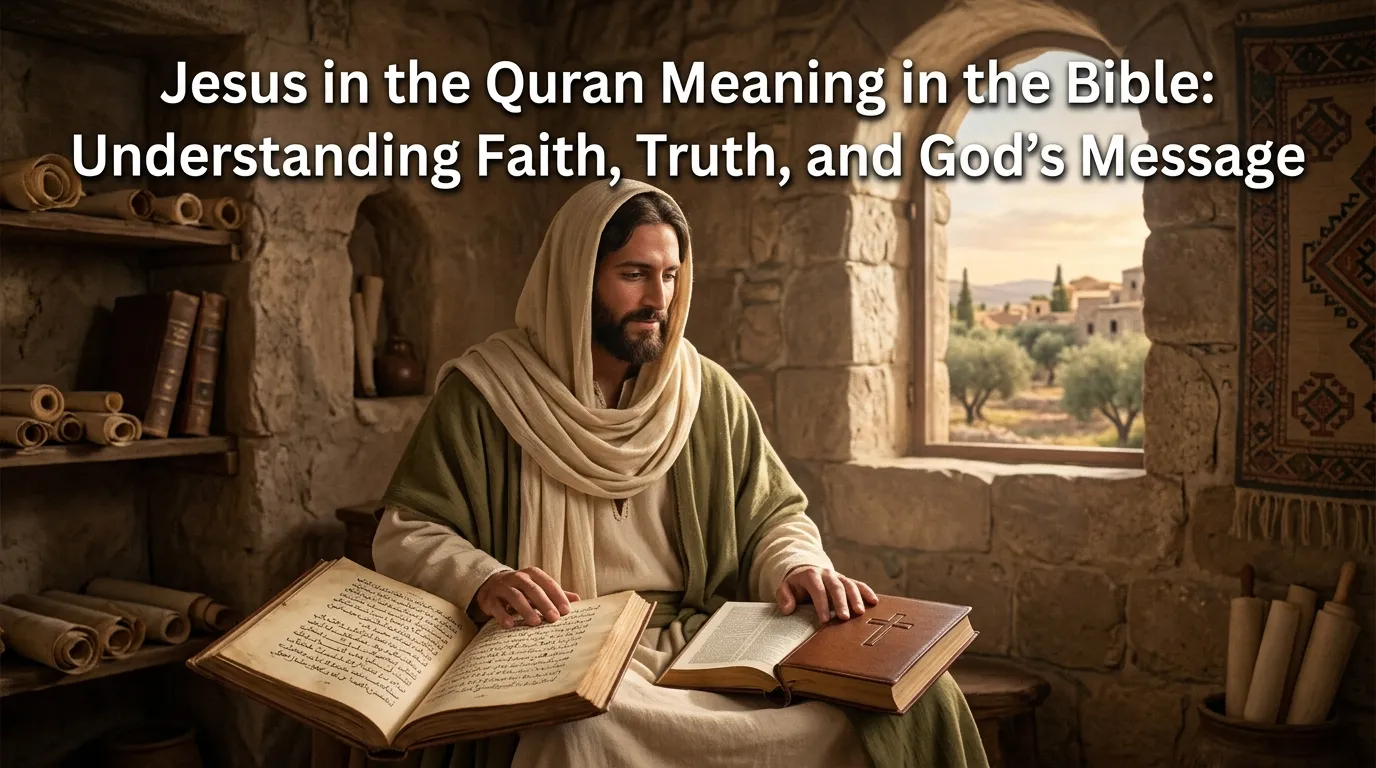
Imagine sitting with friends from different faith backgrounds. The conversation turns to Jesus. One person speaks about what the Bible says. Another mentions what the Quran teaches. You may begin to wonder: What is the meaning of Jesus in the Quran from a Biblical perspective? Why is Jesus honored in both books, and what can Christians learn from this connection?
For many believers, this question brings curiosity, reflection, and a desire for deeper understanding. Jesus is one of the most important figures in human history. His name appears throughout the New Testament, and He is also mentioned many times in the Quran. This shared respect often causes people to ask how these teachings compare and what the Bible reveals about His true identity.
When people encounter this topic through study, conversation, or even a dream, they often seek a deeper spiritual message. They want to understand God’s truth, discover Biblical symbolism, and strengthen their faith.
So, what does the Bible say about Jesus when compared to the Quran’s description of Him? And what spiritual lessons can Christians draw from this important subject?
Let’s explore the Jesus in the Quran meaning in the Bible and discover the hope, guidance, and truth found in God’s Word.
Biblical Meaning of Jesus in the Quran
The Bible presents Jesus as far more than a prophet. According to Scripture, Jesus is the Son of God, the promised Messiah, and the Savior of the world.
One of the clearest verses is John 14:6:
“I am the way and the truth and the life. No one comes to the Father except through me.”
This verse reveals a central Christian belief. Jesus is not only a messenger of God; He is God’s chosen path for salvation.
The Quran speaks respectfully of Jesus, known as Isa. It describes Him as a prophet, miracle worker, and messenger from God. Christians recognize these honorable descriptions but also note that the Bible teaches something greater about His identity.
Jesus as the Promised Messiah
The Old Testament contains many prophecies about the coming Messiah. Christians believe these promises were fulfilled in Jesus.
Isaiah 9:6 says:
“For to us a child is born, to us a son is given.”
This prophecy points to Christ’s divine mission. The Bible teaches that Jesus came to bring redemption, forgiveness, and eternal life.
The Divine Nature of Christ
One major difference between Biblical teaching and the Quran’s description is the nature of Jesus.
John 1:1 states:
“In the beginning was the Word, and the Word was with God, and the Word was God.”
Later in John 1:14, the Bible explains that the Word became flesh and lived among us. Christians understand this to mean that Jesus is both fully God and fully man.
This truth is at the heart of Christian belief and shapes the Biblical understanding of who Jesus is.
The Meaning of Jesus’ Miracles
Both the Bible and the Quran mention miracles performed by Jesus. These miracles carry important biblical symbolism.
When Jesus healed the sick, gave sight to the blind, and raised the dead, He revealed God’s power and compassion.
Matthew 11:5 says:
“The blind receive sight, the lame walk, those who have leprosy are cleansed.”
These miracles point to God’s kingdom and His desire to restore broken lives.
The Cross and Salvation
The greatest difference between the Biblical and Quranic views of Jesus involves His death and resurrection.
According to the Bible, Jesus willingly died on the cross for humanity’s sins and rose again on the third day.
Romans 5:8 declares:
“But God demonstrates his own love for us in this: While we were still sinners, Christ died for us.”
This message offers hope, forgiveness, and reconciliation with God.
A Message of Love and Truth
The Biblical meaning behind discussions of Jesus in the Quran often reminds Christians to focus on truth while showing love and respect toward others.
Jesus taught:
“Love your neighbor as yourself” (Mark 12:31).
Christians are called to share their faith with kindness, humility, and grace.
Spiritual Significance and Symbolism
The topic of Jesus in the Quran carries several important spiritual lessons for Christians.
First, it highlights the importance of seeking God’s truth. Many people search for answers about faith, purpose, and eternity. The Bible encourages believers to look to Jesus for those answers.
Second, it reminds us of God’s desire to reveal Himself to humanity. Throughout history, God has called people to know Him, trust Him, and follow His ways.
Jesus Himself said in John 8:12:
“I am the light of the world.”
This image of light is powerful spiritual symbolism. Light guides travelers through darkness. In the same way, Christ guides believers through life’s struggles and uncertainties.
Third, the discussion encourages spiritual growth. A Christian may encounter people with different beliefs at work, school, or in daily life. These moments can become opportunities to deepen understanding, practice compassion, and strengthen faith.
Many believers experience a spiritual awakening when they study Scripture more closely. As they learn about Christ, they discover greater peace, wisdom, and confidence in God’s promises.
Prayer also plays a key role. When questions arise, Christians can ask God for discernment and guidance. Through prayer, believers grow closer to the Lord and learn to trust His truth.
Biblical Interpretations in Dreams or Real Life
Sometimes people dream about Jesus, religious conversations, or sacred books. These experiences often lead them to seek dream interpretation and spiritual understanding.
If Jesus appears in a peaceful dream, it may symbolize God’s presence, comfort, guidance, or a call to draw nearer to Him.
A dream involving discussions about faith may reflect a search for truth or a desire for spiritual clarity. It can encourage deeper Bible study and prayer.
If the dream feels confusing or challenging, it may represent inner questions about beliefs, identity, or spiritual direction. Such dreams should be approached carefully and tested against Scripture.
The Bible encourages believers to seek wisdom from God rather than relying solely on personal interpretations.
James 1:5 says:
“If any of you lacks wisdom, you should ask God.”
In real life, conversations about Jesus in the Quran can also serve as opportunities for learning and reflection. They may inspire believers to study God’s Word more deeply and appreciate the unique role of Christ in Christian faith.
Practical Lessons & Faith Insights
The Christian meaning behind this topic is simple yet powerful:
- Seek truth through God’s Word.
- Keep Jesus at the center of your faith.
- Show love and respect when discussing beliefs.
- Pray for wisdom and understanding.
- Trust God’s guidance in every spiritual journey.
As you learn more about Christ, allow His teachings to shape your heart, strengthen your faith, and deepen your relationship with God.
Conclusion
The Jesus in the Quran meaning in the Bible ultimately points Christians back to the identity of Jesus Christ as Savior, Messiah, and Son of God. While the Bible and the Quran both speak of Jesus, the Bible reveals His unique role in God’s plan of salvation.
This topic can inspire deeper study, thoughtful reflection, and meaningful conversations about faith. Above all, it reminds believers to seek God’s truth through Scripture, prayer, and a personal relationship with Christ.
May your journey of faith be filled with hope, guidance, and the comforting presence of God as you continue to grow in understanding and trust Him more each day.