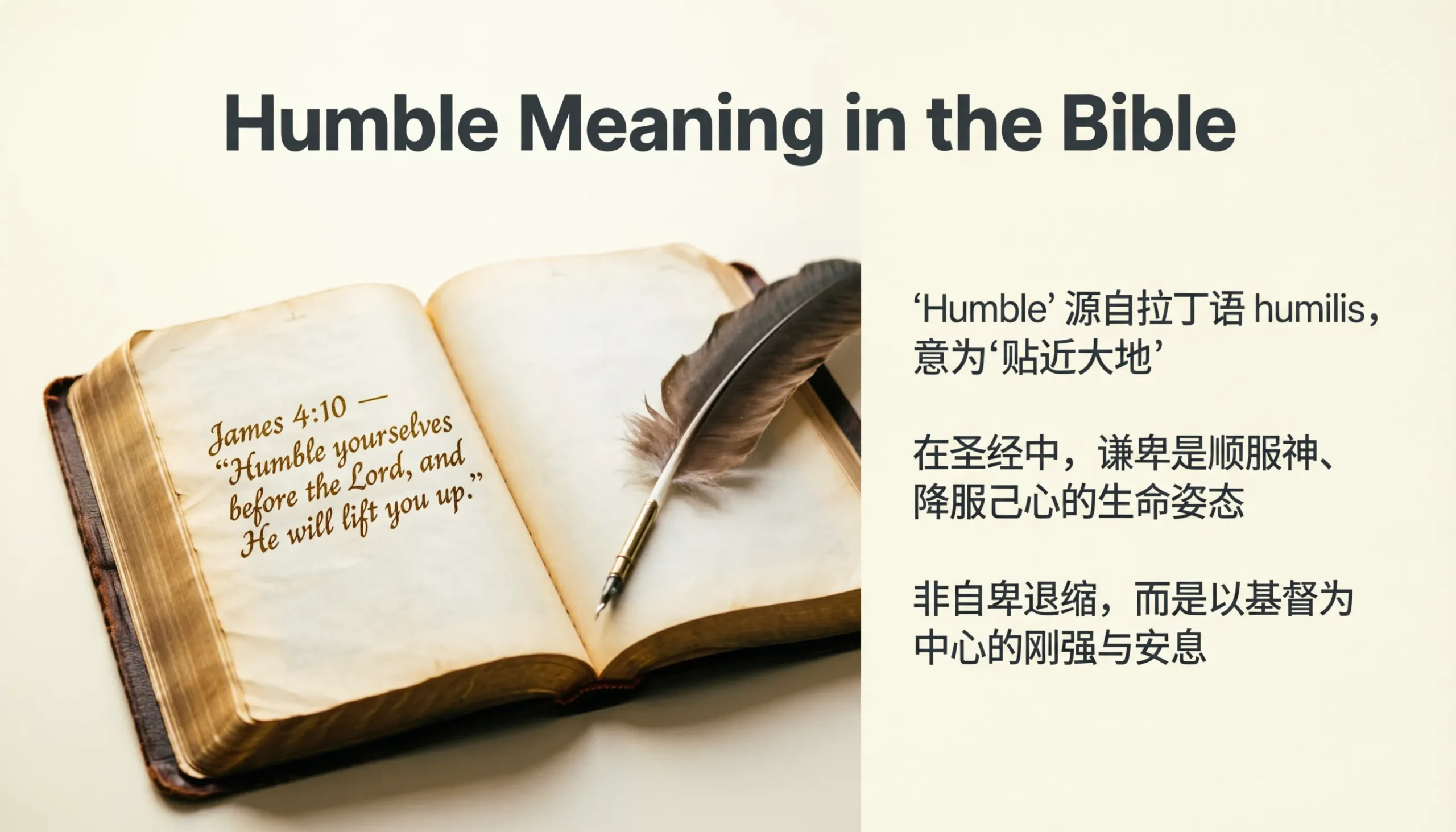
Have you ever felt a quiet pull in your heart after reading Scripture—an invitation to lower your pride, soften your ego, and walk gently with others? The word humble in the Bible is more than a personality trait. It’s a spiritual posture, a deep inner alignment that transforms how we relate to God, people, and ourselves.
In a world that rewards self-promotion, the biblical meaning of humility feels almost revolutionary. Yet throughout Scripture, humility is presented as a gateway to grace, wisdom, and spiritual growth.
In this detailed guide, we’ll explore the humble meaning in the Bible from spiritual, psychological, and even scientific perspectives. We’ll also connect humility to emotional processing, dream symbolism, and personal transformation—helping you understand how this ancient virtue still shapes modern lives.
What Does “Humble” Mean in the Bible?
In biblical language, the word “humble” carries rich meaning.
In the Old Testament, the Hebrew word often translated as humble is anav or ani, implying meekness, lowliness, and dependence on God. In the New Testament, the Greek word tapeinos conveys lowliness of mind and modesty.
One of the most powerful verses appears in Micah 6:8:
“And what does the Lord require of you? To act justly and to love mercy and to walk humbly with your God.”
Humility in Scripture is not weakness. It is strength under control, a conscious decision to surrender pride and trust divine wisdom.
The Spiritual Meaning of Humility
Spiritually, humility represents:
- Dependence on God
- Freedom from ego
- Openness to correction
- Servanthood and compassion
In James 4:6, we read:
“God opposes the proud but shows favor to the humble.”
Humility positions the heart to receive grace. It is the spiritual soil where growth happens.
The ultimate example of humility is found in Philippians 2:5–8, describing Jesus Christ as one who humbled Himself—even to death on a cross.
Spiritually speaking, humility is alignment with divine will.
Humility and Emotional Processing
Although humility is not a dream symbol itself, it often appears in dreams as:
- Being corrected publicly
- Apologizing sincerely
- Serving others
- Losing status or recognition
These scenarios may reflect emotional processing related to pride, insecurity, or personal growth.
Gradual Realization vs. Sudden Reaction
When humility develops gradually:
- You begin noticing subtle ego patterns.
- You feel gentle conviction.
- Growth feels peaceful.
When humility comes suddenly:
- A failure humbles you.
- A confrontation exposes pride.
- Emotional intensity forces change.
Both paths can lead to transformation.
Freudian Interpretation of Humility
From a Freudian lens, humility might represent:
- The ego being corrected by the superego.
- Guilt and moral awareness surfacing.
- A subconscious desire for acceptance or forgiveness.
According to Sigmund Freud, internal conflicts between desire and morality shape behavior. Humble actions may emerge as a way to resolve inner tension.
Jungian Perspective on Humility
Carl Jung saw personal growth as integrating the shadow self.
In Jungian psychology:
- Humility symbolizes ego surrender.
- It marks progress toward individuation.
- It reflects awareness of both strengths and weaknesses.
When humility appears in dreams or spiritual reflection, it may indicate deeper self-integration.
Energy-Based & Spiritual Awakening Views
In energy traditions:
- Pride is associated with blocked heart energy.
- Humility opens compassion and empathy.
- Surrender lowers inner resistance.
Humility often emerges during spiritual awakening when old identities dissolve and a more authentic self emerges.
Scientific View: REM Sleep & Emotional Growth
Modern science offers insight into humility-related themes.
During REM sleep, the brain:
- Processes emotional memories.
- Integrates social experiences.
- Reduces emotional intensity over time.
Neuroscience suggests that emotional experiences involving embarrassment, correction, or vulnerability are replayed and softened during REM sleep.
Humility may develop when the brain reframes painful ego experiences into lessons.
Emotionally humbling moments activate brain areas linked to:
- Self-reflection (prefrontal cortex)
- Social awareness
- Empathy circuits
In short, humility is not just spiritual—it’s neurological.
Symbolism of Humility in the Bible
Biblical imagery often connects humility with:
- Dust and ashes (human fragility)
- Kneeling (surrender)
- Washing feet (service)
- Children (innocence and dependence)
In Matthew 18:4, humility is compared to becoming like a child—trusting and open-hearted.
These symbols represent surrender without shame.
Personal Growth Themes
The humble meaning in the Bible connects strongly to:
- Emotional maturity
- Self-awareness
- Leadership through service
- Inner peace
True humility is not self-hatred. It’s accurate self-assessment.
It allows:
- Confidence without arrogance
- Strength without dominance
- Success without pride
Causes & Triggers of Humbling Experiences
Humility often develops after:
- Failure
- Loss
- Public embarrassment
- Spiritual conviction
- Deep prayer or meditation
- Relationship conflicts
These experiences can feel painful at first but often lead to long-term growth.
Reflection Practices to Cultivate Humility
If you want to deepen humility in your life, try:
1. Journaling
Write about:
- Moments you felt corrected.
- Situations where pride interfered.
- Lessons learned from failure.
2. Mindfulness
Practice observing:
- Defensive reactions.
- Ego-driven thoughts.
- Emotional triggers.
Simply noticing them weakens their control.
3. Prayer or Quiet Reflection
Ask:
- “Where is my heart resisting growth?”
- “What can I surrender?”
4. Service
Engage in small acts of kindness without seeking recognition.
FAQ: Humble Meaning in the Bible
What does humble mean in the Bible?
Biblically, humble means recognizing dependence on God, rejecting pride, and living with gentleness and service.
Is humility weakness?
No. Scripture presents humility as strength under control, modeled by Jesus Christ.
Why does God value humility?
Because humility opens the heart to grace, wisdom, and transformation.
Can science explain humility?
Yes. Neuroscience shows that emotional processing during REM sleep and social reflection supports ego regulation and empathy.
How can I become more humble?
Practice journaling, mindfulness, self-examination, service, and honest self-reflection.
Mindful Summary
The humble meaning in the Bible goes far beyond modest behavior. It is a spiritual posture, a psychological maturity, and even a neurological process of growth.
Humility aligns the heart with God, integrates the ego, softens emotional wounds, and fosters empathy.
Sometimes humility arrives gradually through reflection. Other times, it comes suddenly through failure or correction. Either way, it refines the soul.
To walk humbly is to live consciously—aware of your strengths, honest about your flaws, and open to continual growth.
In a loud world of self-promotion, humility remains quietly powerful.
