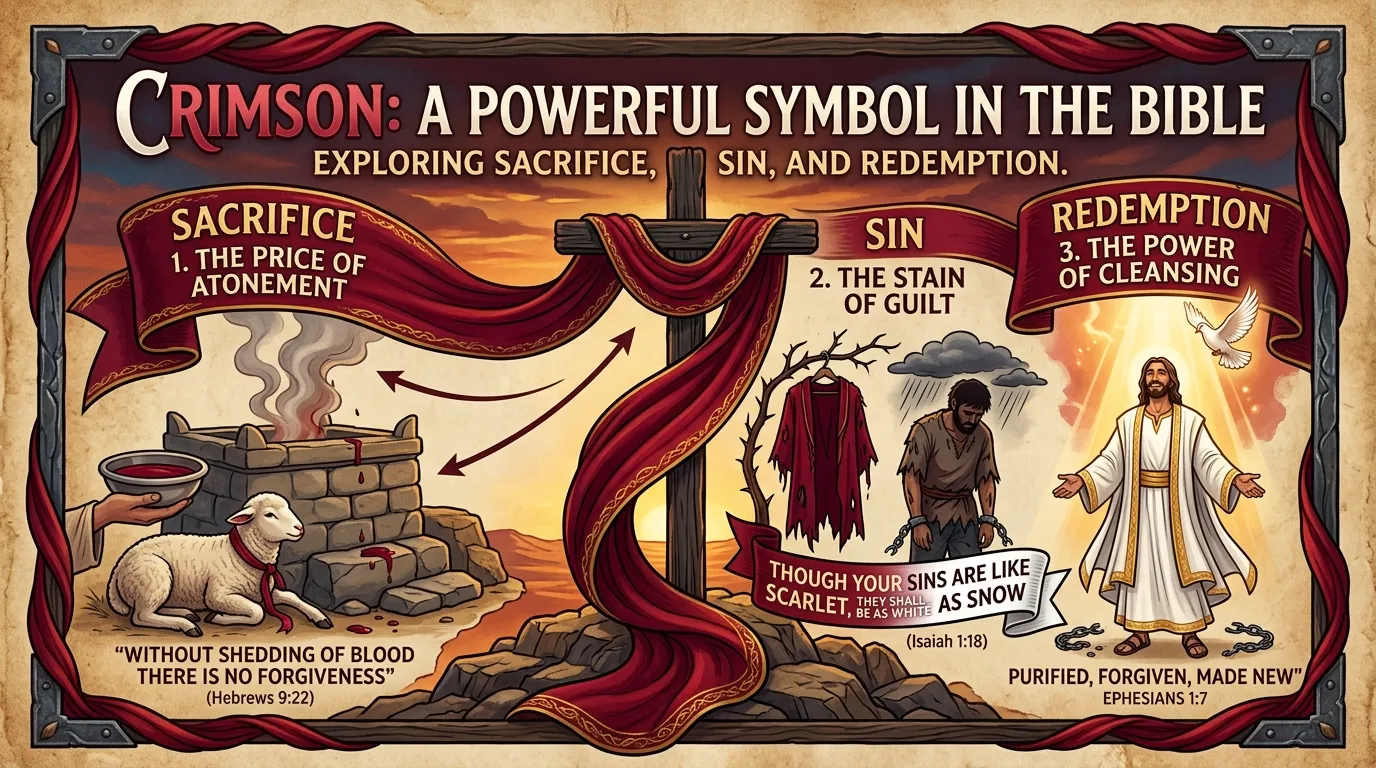
Imagine opening your Bible and noticing a deep, rich color woven through its pages. It is the color of royal robes, sacred curtains, and powerful symbols of faith. That color is crimson.
Perhaps you saw crimson in a dream. Maybe you noticed it during prayer, in a painting, or in a Bible study. Its bold appearance can make you wonder, What does crimson mean in the Bible? Is it a sign of something spiritual? Does it carry a message from God?
In Scripture, colors often have deep meaning. They help tell God’s story and reveal important truths about faith, salvation, and spiritual growth. Crimson is one of the most meaningful colors found in the Bible. It is connected to sacrifice, sin, cleansing, and the amazing grace of God.
The color crimson may seem simple at first glance, but its biblical symbolism carries a powerful message of hope. It reminds believers that no matter how far they have wandered, God offers forgiveness and restoration through His love.
As we explore the color crimson meaning in the Bible, we will discover what Scripture teaches about this striking color and how its spiritual message can encourage your faith today.
Biblical Meaning of Color Crimson in the Bible
Crimson as a Symbol of Sacrifice
One of the strongest biblical meanings of crimson is sacrifice.
In ancient Israel, crimson fabric was used in sacred items connected to worship. God instructed His people to use crimson yarn in the construction of the tabernacle.
In the book of Exodus, crimson appears among the materials chosen for God’s holy dwelling place:
“Blue, purple and scarlet yarn…” (Exodus 25:4)
The scarlet or crimson color pointed toward the shedding of blood. Throughout the Bible, blood represents life and sacrifice. This symbolism ultimately points to Jesus Christ, whose sacrifice on the cross brought salvation to humanity.
The crimson color reminds believers that forgiveness comes through God’s provision and mercy.
Crimson and the Reality of Sin
Crimson also represents sin in Scripture.
One of the most famous Bible verses involving crimson is found in Isaiah:
“Though your sins are like scarlet, they shall be as white as snow.” (Isaiah 1:18)
This verse paints a powerful picture. Sin leaves a stain that people cannot remove on their own. The crimson stain represents guilt, failure, and separation from God.
Yet the verse does not end with judgment. It ends with hope. God promises cleansing and renewal for those who turn to Him.
This beautiful message shows that God’s grace is greater than any sin.
Crimson as a Symbol of Redemption
While crimson can symbolize sin, it also points to redemption.
The Bible often uses blood imagery to show God’s plan of salvation. Through Jesus’ sacrifice, believers receive forgiveness and a new beginning.
The crimson color reminds Christians that Christ paid the price for sin. His love opened the way for reconciliation with God.
This symbolism gives believers confidence that God can transform brokenness into healing and darkness into light.
Crimson in the Tabernacle and Temple
Crimson was not chosen by accident for sacred worship.
The tabernacle included crimson threads in curtains, garments, and ceremonial items. These details highlighted the holiness of God and the need for atonement.
Every time the Israelites saw crimson woven into holy objects, they were reminded of God’s covenant and His desire to dwell among His people.
The color served as a visual lesson about worship, sacrifice, and faith.
Crimson and Christ’s Suffering
The crimson theme reaches its fullest meaning in Jesus Christ.
Before His crucifixion, Jesus was mocked by soldiers and clothed in a robe associated with royalty and suffering.
His sacrifice fulfilled the deeper meaning behind the crimson symbolism found throughout the Old Testament.
For Christians, crimson points to the greatest act of love ever shown—the sacrifice of Christ for the salvation of the world.
A Message of Hope
The biblical symbolism of crimson is not meant to create fear. Instead, it reveals the heart of God’s redemptive plan.
Crimson reminds believers that:
- God sees every struggle.
- Sin can be forgiven.
- Grace is available to all.
- Jesus provides redemption.
- Hope is always possible through faith.
This is why crimson remains one of the most powerful colors in biblical symbolism.
Spiritual Significance and Symbolism
Beyond its biblical references, crimson carries rich spiritual symbolism for believers today.
First, it speaks of transformation.
A person may begin life carrying spiritual wounds, guilt, or regret. Yet God’s grace can completely change a heart. Just as Isaiah described crimson sins becoming white as snow, believers experience renewal through faith.
Crimson also symbolizes deep devotion.
The color’s intensity reminds Christians of God’s passionate love. His commitment to His people is not weak or distant. It is strong, personal, and faithful.
Another spiritual lesson is spiritual awakening.
When people encounter God, they often become more aware of both His holiness and His mercy. Crimson reflects this balance. It reminds believers that God is just, yet full of compassion.
In everyday life, seeing crimson may encourage reflection on:
- Prayer and repentance
- God’s forgiveness
- Christ’s sacrifice
- Spiritual growth
- Renewed faith
For many Christians, crimson becomes a reminder that God’s grace continues to work in their lives every day.
Biblical Interpretations in Dreams or Real Life
If crimson appears in a dream or catches your attention in daily life, many Christians view it as a possible spiritual message worth praying about.
A peaceful dream involving crimson may symbolize:
- God’s protection
- Spiritual renewal
- Christ’s sacrifice
- A season of healing
- Deeper faith
A dream where crimson feels overwhelming or troubling may encourage self-examination. It could be a reminder to seek God’s guidance, confess hidden struggles, or return to prayer.
The context matters greatly.
For example:
- A beautiful crimson cloth may symbolize worship and devotion.
- Crimson stained hands may represent a need for forgiveness.
- A crimson sunset may point to hope and God’s presence.
- Crimson in a church setting may symbolize redemption and grace.
Dream interpretation should always be approached with wisdom, prayer, and alignment with Scripture. The Bible remains the most reliable guide for understanding spiritual symbolism.
Rather than fearing a dream, believers can bring it before God and seek His direction with peace and trust.
Practical Lessons & Faith Insights
The color crimson teaches several simple but powerful lessons:
- God’s grace is stronger than sin.
- Forgiveness is always available through Christ.
- Faith leads to transformation.
- Prayer brings clarity and peace.
- God’s love never stops pursuing His people.
When crimson comes to mind, let it remind you to draw closer to God and trust His plan for your life.
Conclusion
The color crimson meaning in the Bible is rich with spiritual truth. It symbolizes sacrifice, sin, redemption, and God’s amazing grace. From the tabernacle to the cross, crimson points to God’s plan to restore His people through love and forgiveness.
Whether you encounter crimson in Scripture, dreams, or daily life, its message is one of hope. It reminds believers that God can cleanse, heal, and transform every heart that turns to Him.
As you continue your faith journey, may the symbolism of crimson encourage you to trust God’s promises, seek His guidance in prayer, and rest in the saving grace of Jesus Christ.