Have you ever seen someone who once believed strongly in God…
but later walked away from faith?
It can feel confusing, painful, and even frightening.
The Bible has a word for this kind of spiritual turning away.
That word is apostasy.
Many people ask:
What does apostasy mean in the Bible?
Is it doubt? Is it sin? Or something deeper?
Understanding apostasy can help us guard our faith, grow spiritually, and stay close to God’s truth.
Let’s explore the biblical meaning of apostasy and the powerful spiritual message behind it.
Biblical Meaning of Apostasy
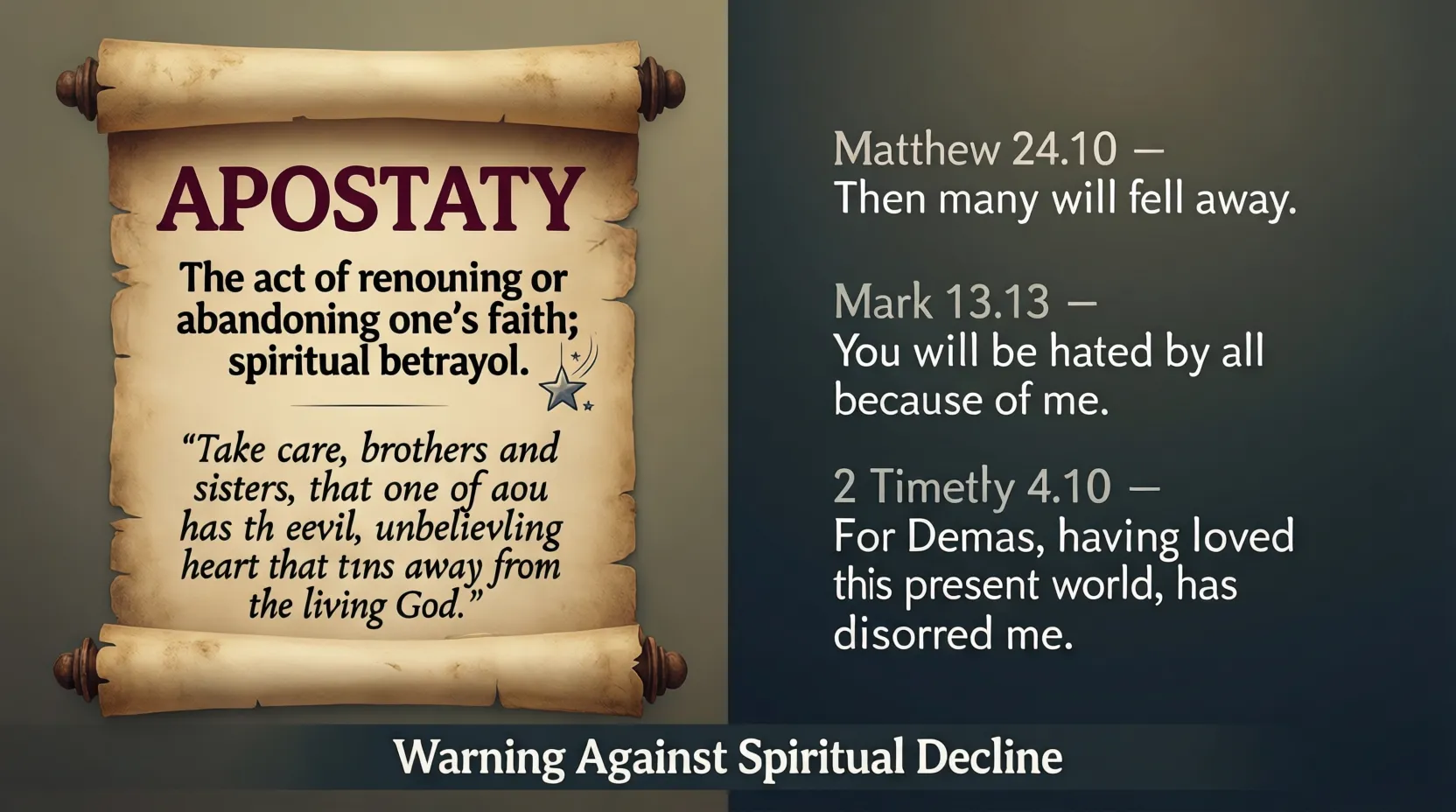
The word apostasy means falling away from faith or abandoning God’s truth.
1. Definition of Apostasy in the Bible
In simple words, apostasy is:
- Turning away from God
- Rejecting true Christian faith
- Abandoning biblical truth after knowing it
- Choosing false beliefs instead of God’s Word
The Bible warns about this clearly:
“Now the Spirit expressly says that in later times some will depart from the faith.”
— 1 Timothy 4:1
This verse shows that apostasy is not just unbelief—it is leaving faith after once believing.
2. Original Meaning of the Word
The word apostasy comes from the Greek word “apostasia,” which means:
- Defection
- Rebellion
- Departure from truth
It describes a deliberate turning away, not just a moment of doubt.
3. Apostasy vs. Doubt
It is important to understand the difference:
- Doubt = questions or struggles in faith
- Apostasy = rejecting faith completely
The Bible shows that doubt can lead to growth, but apostasy is a serious spiritual danger.
Spiritual Significance and Symbolism of Apostasy
1. Apostasy as a Heart Problem
In the Bible, apostasy begins in the heart.
God says:
“These people honor Me with their lips, but their heart is far from Me.”
— Matthew 15:8
A person may still speak about God, but inside, their heart has turned away.
Apostasy symbolizes:
- Spiritual coldness
- Pride
- Love for worldly things
- Loss of spiritual hunger
2. Warning Signs of Apostasy
The Bible reveals signs that can lead toward apostasy:
- Ignoring God’s Word
- Rejecting biblical truth
- Following false teachings
- Loving sin more than God
- Losing desire for prayer
Hebrews warns believers:
“Take care, brothers, lest there be in any of you an evil, unbelieving heart, leading you to fall away from the living God.”
— Hebrews 3:12
This shows that apostasy often happens slowly, not suddenly.
3. Apostasy in the Last Days
The Bible teaches that apostasy will increase before Christ’s return.
“Let no one deceive you in any way. For that day will not come, unless the rebellion comes first.”
— 2 Thessalonians 2:3
Here, “rebellion” refers to a great falling away from faith.
This reminds believers to stay strong in truth.
Apostasy in Real Life and Spiritual Experience
1. How Apostasy Appears in Daily Life
Apostasy can look like:
- Rejecting Jesus after once believing
- Claiming faith but denying biblical truth
- Following false spiritual teachings
- Mocking Christianity after once defending it
Sometimes, apostasy is not loud—it is quiet and gradual.
2. Can a Believer Return After Apostasy?
This is a deep question.
The Bible shows that God is merciful, but apostasy is serious.
Hebrews says:
“If we deliberately keep on sinning after receiving the knowledge of the truth, no sacrifice for sins is left.”
— Hebrews 10:26
Yet, the Bible also shows God’s grace.
Peter denied Jesus but returned through repentance.
This teaches us that repentance and humility can restore a heart that turns back to God.
3. How to Protect Yourself from Apostasy
The Bible encourages believers to stay rooted in faith.
Ways to guard your faith:
- Read the Bible regularly
- Stay connected to Christian community
- Pray consistently
- Seek truth, not just feelings
- Hold firmly to Christ
Jesus said:
“If you abide in My word, you are truly My disciples.”
— John 8:31
Staying in God’s Word protects the heart from falling away.
Practical Lessons and Faith Insights
- Guard your heart and mind with God’s truth.
- Do not ignore small spiritual warnings.
- Stay close to God through prayer and Scripture.
- Be humble and teachable in faith.
- Choose truth over comfort.
A strong faith grows when it is rooted in God’s Word, not just emotions.
Conclusion
In the Bible, apostasy means turning away from God and rejecting true faith after once knowing it.
It is a serious spiritual condition, but it also serves as a warning and a call to remain faithful.
When you understand apostasy, you learn the value of staying close to God’s truth.
Let this truth inspire you to strengthen your faith, seek God daily, and hold firmly to His Word.
Because in a world full of confusion,
remaining faithful to God is the greatest spiritual victory.